

Apollo vs ZoomInfo: The Complete 2026 Comparison
Compare Apollo vs ZoomInfo for B2B prospecting. We break down data accuracy, pricing, workflows, and compliance to help you choose the right platform.
What if the cheaper prospecting platform costs more for every account your sales team can pursue? That's the question most Apollo vs ZoomInfo comparisons miss when they rank database size, seat prices, and feature lists without testing the accounts a buyer needs.
The useful comparison isn't contacts purchased. It's cost per valid, sales-ready account in your target geography and segment, including the work required to verify, qualify, and prioritize it. Apollo and ZoomInfo should be evaluated against that standard, not against a generic accuracy score.
Table of Contents
- Why the Apollo vs ZoomInfo Choice Matters
- Platform Overview and Growth Models
- Data Coverage and Accuracy Compared
- Prospecting Workflows and Enrichment
- Pricing Models and Total Cost of Ownership
- Compliance and Privacy Considerations
- Ideal Use Cases and Final Recommendation
Why the Apollo vs ZoomInfo Choice Matters
Consider a sales leader evaluating both platforms. One proposal emphasizes accessible pricing and broad prospecting access. The other emphasizes enterprise intelligence and deeper coverage. Neither proposal answers the operational question: which platform will produce accounts that this team can confidently contact?
That scenario is illustrative, not a customer case study. It exposes a procurement problem: buyers often compare what vendors sell rather than what sellers need to do.
For an initial shortlist, the distinctions look like this:
| Decision area | Apollo | ZoomInfo |
|---|---|---|
| Buying model | Freemium-led access and published seat tiers | Enterprise-oriented, negotiated contracts |
| Channel hypothesis to test | Email-led prospecting | Calling-led prospecting |
| Main evaluation risk | Mistaking inexpensive access for inexpensive execution | Paying for breadth the team won't use |
| Procurement priority | Validate usable output and operating effort | Validate incremental value against the proposed commitment |
These are evaluation hypotheses, not universal product rankings. The underlying growth, performance, and pricing evidence supports different starting points, but your own account sample must determine the purchase.
Define an accepted account before comparing vendors
A sales-ready account needs more than a populated email field. For procurement purposes, define it as an organization that matches your ideal customer profile, has an independently confirmed relevant contact, and meets your team's outreach and qualification requirements.
Add a reason to prioritize it. A correct contact at an unsuitable company shouldn't pass acceptance, and several contacts at the same company shouldn't automatically count as several qualified opportunities.
For a broader shortlist before narrowing the decision, Ploot's buyer's guide to lead gen is a useful companion resource. Keep the selection process anchored to your own acceptance criteria rather than the length of any vendor's feature checklist.
- Sales leaders: Establish what qualifies an account for seller attention.
- Revenue operations: Define how verification, duplicates, and rejected records will be recorded.
- Finance: Compare the fully loaded cost of accepted output, not just subscription access.
Practical rule: Don't let the vendor define a successful record after you've already paid for it.
This distinction matters because a database purchase and a productive prospecting process aren't the same thing. Your team needs an explicit handoff standard between them.
Platform Overview and Growth Models
Apollo's documented trajectory is a product-led distribution story. It was founded in 2015, entered Y Combinator's Winter 2016 program, and had approximately 500 customers by June 2018; by March 2022, it reported more than 1 million users across 160,000 companies, before announcing a $100 million Series D at a $1.6 billion valuation in August 2023, according to the documented Apollo growth history.
Those are historical milestones, not current customer counts. Their analytical value is that they show how Apollo expanded through accessible adoption rather than establishing today's market share.
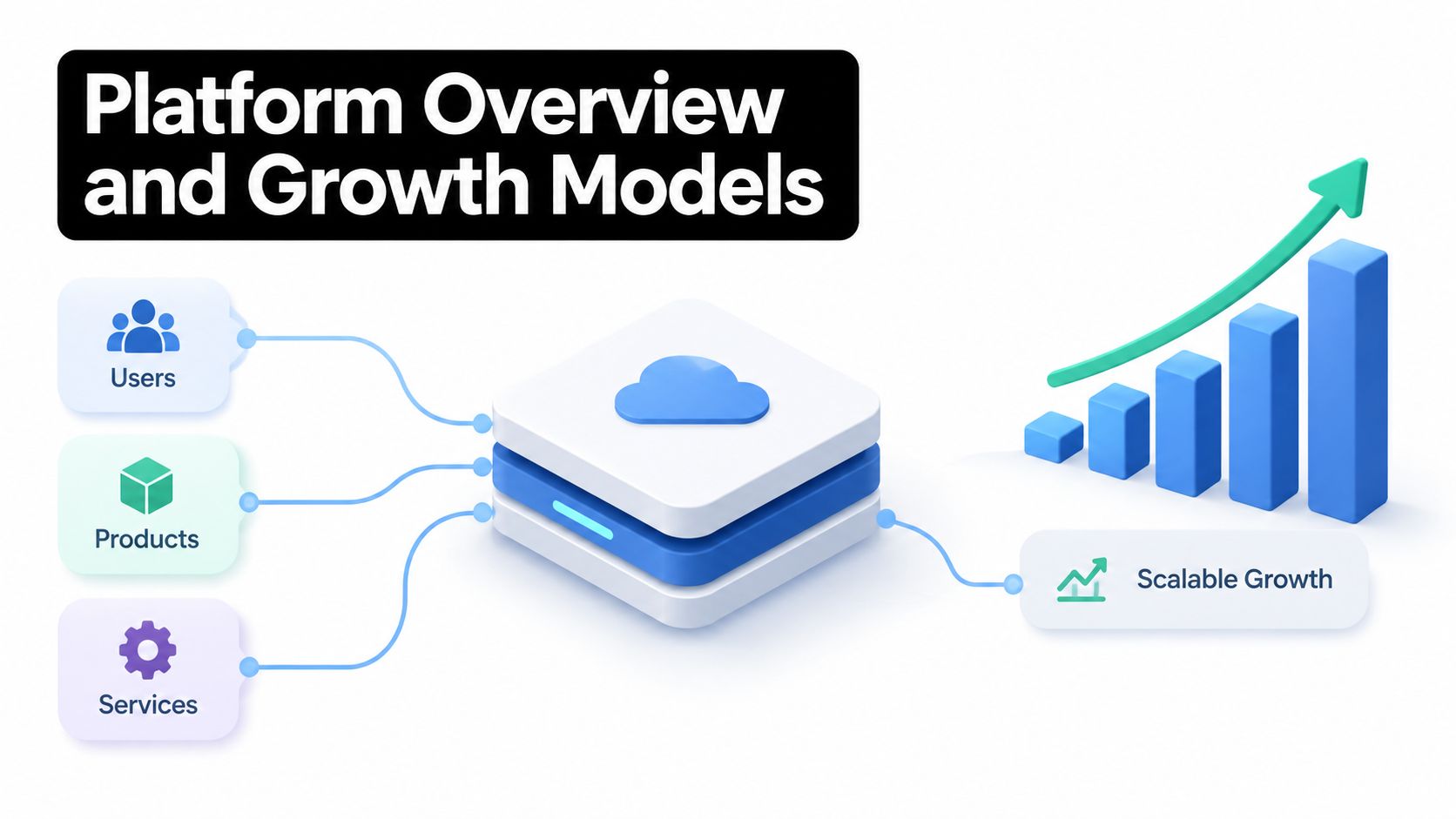
The illustration below provides a conceptual view of platform growth, not a measurement of either vendor's infrastructure.
Distribution scale and contract scale aren't interchangeable
ZoomInfo's enterprise orientation is visible in a different metric: as of December 31, 2024, it reported 1,867 customers with more than $100,000 in annual contract value, according to its annual report.
Comparing that enterprise-contract cohort with Apollo's historical user total would be misleading. Registered users, participating companies, paying businesses, and large contractual customers describe different commercial relationships.
The defensible conclusion is narrower than declaring a winner. Apollo's history supports a freemium-led adoption model. ZoomInfo's disclosure demonstrates a substantial base of high-value business contracts.
For buyers, that difference should change the evaluation process:
- For an Apollo evaluation: Test whether accessible adoption translates into a repeatable workflow beyond the initial user.
- For a ZoomInfo evaluation: Require the proposed package to justify its commitment against specific operational needs.
- For either purchase: Don't infer implementation quality, support responsiveness, or suitability from company scale alone. Verify those separately.
What the business model can't tell you
A large enterprise customer base doesn't prove that a vendor has the right records for your niche. Equally, widespread adoption doesn't prove that a lean team can operate a platform without substantial administrative work.
Use business-model evidence to anticipate buying friction and deployment questions, not to substitute for product testing. Ask who will administer the tool, which sellers will use it, and what happens when those sellers encounter missing or conflicting information.
The distinction between data access and operational intelligence is also useful when evaluating the broader category. This sales intelligence platform guide provides a complementary framework for defining what your team expects from the system beyond contact retrieval.
Data Coverage and Accuracy Compared
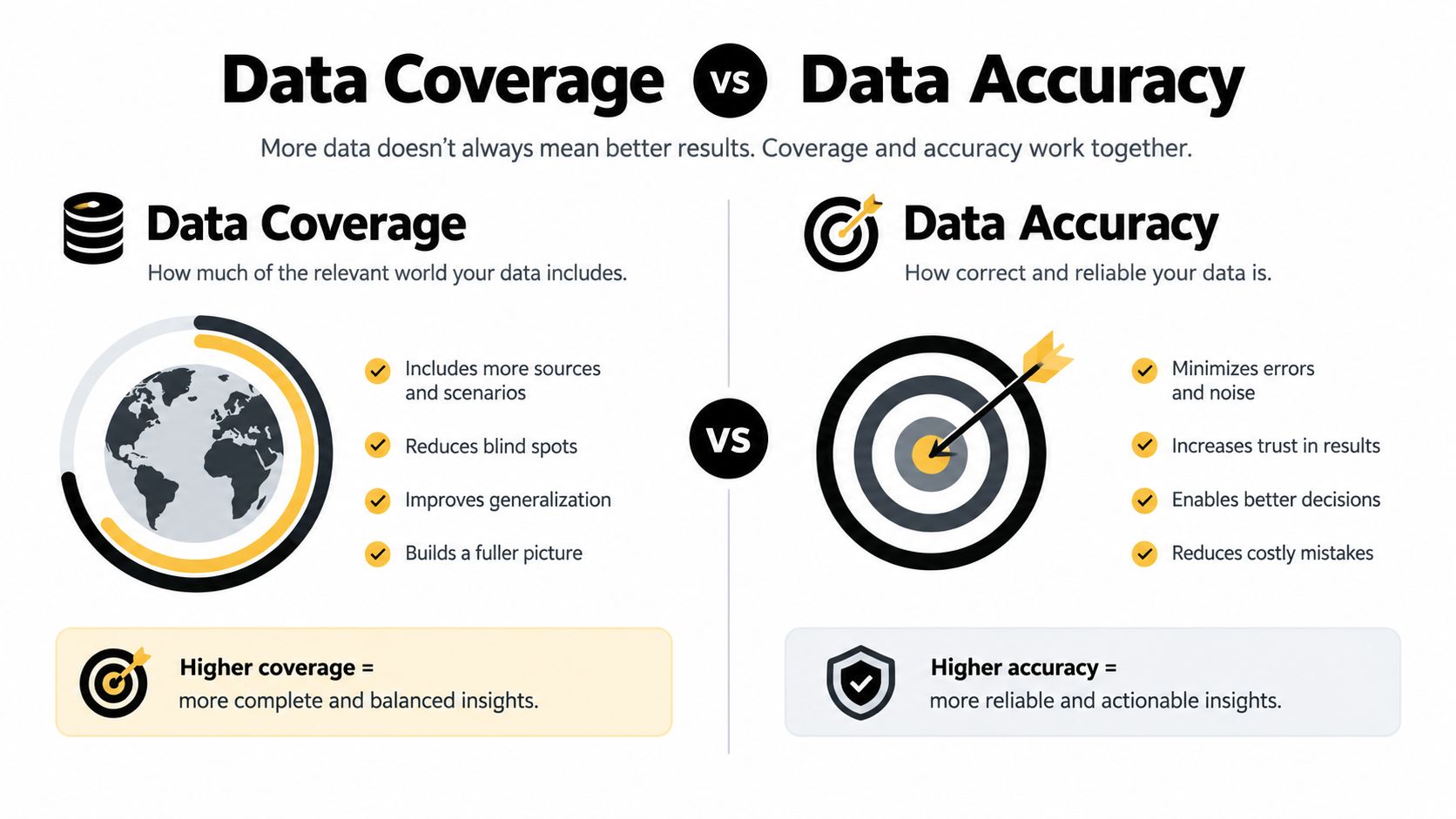
Coverage and accuracy answer different questions. Coverage concerns whether a vendor returns a candidate record. Accuracy concerns whether the returned information is usable for the intended task.
The visual below illustrates that distinction; it shouldn't be treated as an independent audit of either database.
Apollo vs ZoomInfo Data Performance
| Metric | Apollo | ZoomInfo |
|---|---|---|
| Reported database coverage, described in ZoomInfo's published comparison | More than 240 million contacts across 30 million companies | Approximately 500 million contacts across 100 million companies |
| Reported 500-contact test, with a 100-record manual spot check, described in ColdIQ's head-to-head comparison | Direct-dial availability 43%; live-person connections 22%; deliverable email 88%; current job titles 84% | Direct-dial availability 61%; live-person connections 34%; deliverable email 92%; current job titles 89% |
The test suggests a more consequential phone-data advantage for ZoomInfo than an email or job-title advantage. That makes it relevant to calling-led teams, but it doesn't establish the same advantage in every territory, industry, or seniority band.
Treat it as directional evidence, not a universally reproducible benchmark. The comparison comes from a vendor-comparison article rather than a standardized audit of every buyer's market.
A database can contain more records overall and still return fewer useful accounts for your particular territory.
Test the intersection, not isolated fields
The critical unit is an account with the right combination of attributes. A current job title doesn't rescue an invalid email, and a working phone number doesn't make an out-of-scope company worth pursuing.
Build the evaluation around identical account and persona requirements. Separate results by geography, company segment, and intended channel so a strong result in a familiar market doesn't hide poor performance elsewhere.
- Confirm company fit: Check location, business activity, and the criteria that define your target segment.
- Validate the person: Confirm current employment and relevance to the buying process.
- Test the channel: Evaluate email usability and calling outcomes separately.
- Reject duplicate value: Track whether additional records expand account coverage or merely repeat existing information.
For complementary evaluation criteria, The Social Search's resource to compare data enrichment tools can help frame the enrichment layer separately from the original database purchase.
The accompanying video offers another format for reviewing the comparison; the figures above remain the evidence used for this analysis.
Don't interpret deliverable email as permission to contact someone, evidence of purchase intent, or a promise of a meeting. Those are separate acceptance decisions.
The less obvious implication is that your purchasing decision should depend on the weakest required field. If calling is mandatory, email strength can't compensate for missing direct dials. If your workflow is email-only, paying a premium for phone coverage may not solve the actual constraint.
Prospecting Workflows and Enrichment
Start with the task a seller must complete, not the data source they'll open. Finding a relevant company, locating a contact, enriching a CRM record, and deciding why to act now are distinct jobs.
Apollo's database is described as combining connected inbox and CRM contributions, outreach engagement signals, public-web crawling, and third-party partners. ZoomInfo's verification model is described as including more than 300 human researchers, according to ZoomInfo's discussion of database collection and verification.
Those descriptions help explain the inputs. They don't establish how reliably a specific package will complete your workflow.
Evaluate the handoff between discovery and action
For email-led outbound, ask a representative to take an account from discovery to an approved outreach draft. Watch where the representative leaves the platform, corrects a field, checks employment, or researches account context.
For calling-led prospecting, follow the equivalent path from account selection to a usable calling task. Apply the phone-performance evidence already discussed, but also inspect whether the number belongs to the intended person and whether the account meets your qualification rules.
- List building: Measure the effort required to produce an accepted account list, including rejected searches.
- CRM enrichment: Test matching, conflicting values, overwrite rules, and recovery from an incorrect update.
- Inbound qualification: Determine whether the workflow can support an explicit route, nurture, or hold decision.
- Account monitoring: Require evidence of the event, its date, and the action the seller should take.
The mechanics of adding information to existing records deserve their own acceptance criteria. This explanation of B2B data enrichment and how it works provides useful context for distinguishing record completion from qualification.
Don't confuse populated records with buying context
A record can be correct without explaining why a seller should contact that company today. Hiring, leadership changes, technology changes, and review activity are examples of events worth testing when they relate to your offer.
Don't assume either platform lacks account signals, and don't assume a feature named intent delivers the evidence your sellers need. Ask vendors to demonstrate the exact trigger, source, freshness, coverage, and routing behavior included in the proposed package.
Channel automation is another separate decision. If LinkedIn automation is part of the workflow, Linkboost's resource to compare and Dux Soup is an adjacent comparison, not evidence that either contact database can replace that execution layer.
The operational test is whether a seller can explain who to contact, why the account fits, and what justifies acting now. Score those outputs separately. Otherwise, a polished demonstration can conceal the research work your team will still perform manually.
Pricing Models and Total Cost of Ownership
Apollo advertises annual-billing tiers from $49 to $119 per user per month, while a reported benchmark puts ZoomInfo's median annual contract at approximately $33,500, as summarized in Apollo's pricing comparison.
These aren't equivalent price measures. One describes advertised seat tiers; the other describes a reported contract benchmark. Neither establishes your final package, included usage, negotiated terms, or renewal obligations.
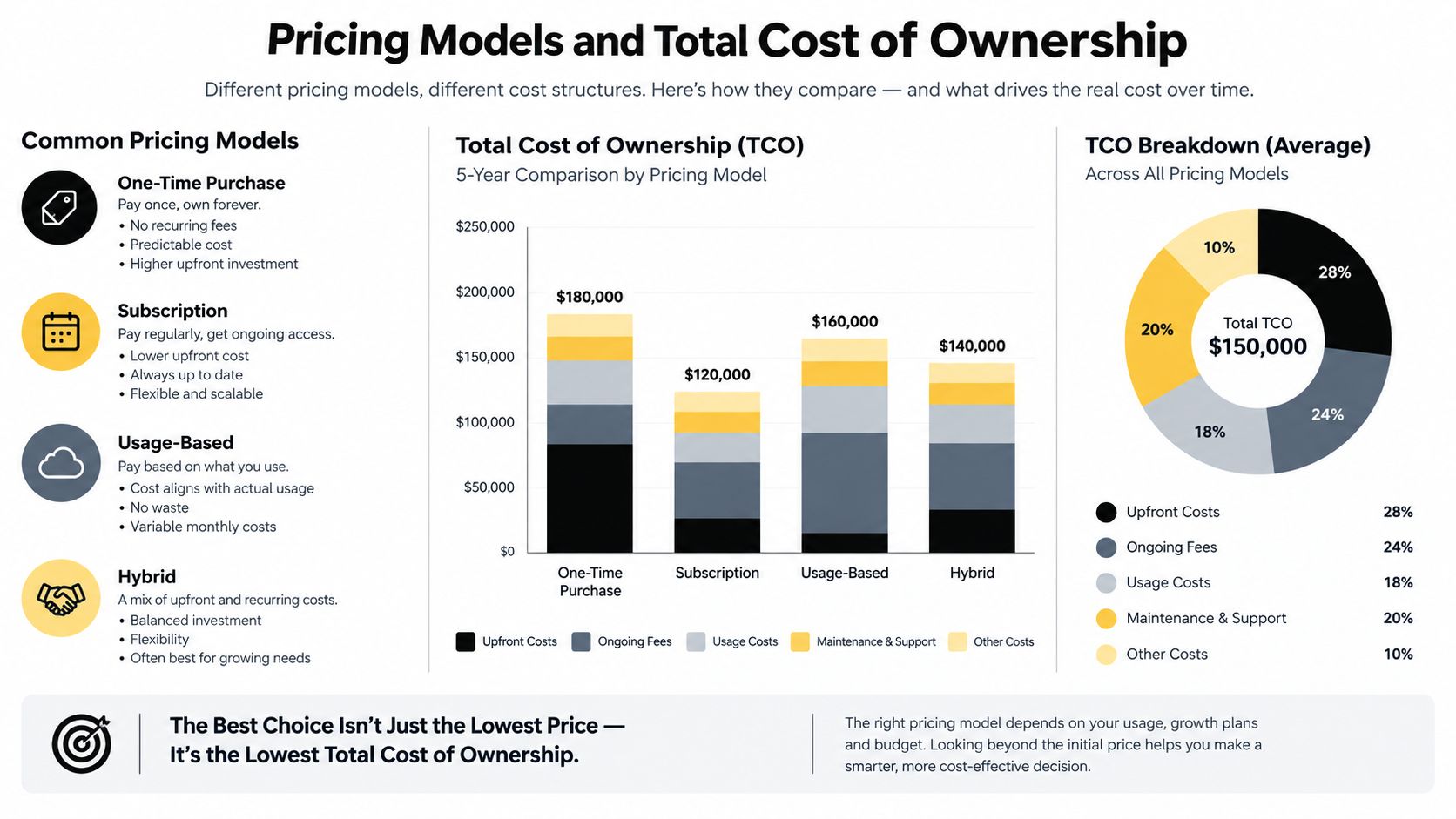
The illustration below presents a general ownership-cost framework, not a verified financial forecast for either vendor.
Build the cost model around accepted output
Use this working definition:
Cost per valid, sales-ready account = all attributable platform and operating costs divided by distinct accounts that pass your acceptance criteria.
Keep the evaluation period consistent across both sides. Include committed costs even if the team doesn't consume the associated capacity.
| Cost category | What procurement should capture |
|---|---|
| Platform commitment | Seats, required packages, minimum commitments, and contracted usage |
| Data operations | Verification, enrichment refreshes, matching, and deduplication |
| Administration | CRM configuration, routing maintenance, and seller support |
| Remediation | Investigating bad records and correcting outreach or data problems |
| Account research | Establishing fit, buying context, and an appropriate next action |
| Governance | Compliance review, suppression handling, and access administration |
Don't count unused credits as a separate cash expense if they're already included in the subscription. Instead, show their effect as committed capacity that produced no accepted output. Likewise, don't charge the same employee's time to several categories.
Small teams need a different denominator
A startup running broad outbound may reasonably prioritize accepted account volume. An agency monitoring a named client list may care more about verified events, while an inbound team may care about correctly routed signups.
For those workflows, add cost per prioritized action alongside the account metric. Define the action precisely: a qualified signup routed, an account with an evidenced trigger, or a meeting attributable to a documented signal.
This can reverse the apparent winner. A cheaper database may require enough verification and research labor to lose its cost advantage. A more expensive database may also be wasteful when the team needs a narrow monitoring workflow rather than broad contact acquisition.
The purchasing rule is conditional, not ideological: pay for the capabilities that reduce the full cost of your required output. Don't assign financial value to features nobody owns, uses, or measures.
Compliance and Privacy Considerations
Accurate data isn't the same as compliant outreach. Human verification can support record quality, but it doesn't establish permission for every use. Similarly, the presence of a contributor network doesn't, by itself, prove improper processing.
The sourcing models described earlier should prompt different diligence questions, not unsupported conclusions about either vendor's legal posture. Your privacy team needs documentation about the data, intended use, and relevant jurisdictions.
Separate vendor assurances from your responsibilities
Start with provenance. Ask how the vendor obtains the fields you intend to use, what it can disclose about those sources, and what obligations apply when you export or synchronize records.
Then follow an individual record through its lifecycle. The operational question isn't merely whether someone can request removal. It's whether your systems can honor the relevant request without reintroducing the same data through a later refresh.
- Data sourcing: What categories of sources contribute the information, and what contractual restrictions apply?
- Connected accounts: What permissions does the proposed setup request, and what information can it access or contribute?
- Objections and removal: How are requests handled, and what must your organization do after receiving an update?
- Suppression: How will your CRM and outreach tools preserve your organization's exclusions?
- Retention and access: Who can export records, how long will you retain them, and how will you remove access?
These are diligence questions, not claims that a particular vendor fails any requirement.
Governance check: A vendor's compliance documentation doesn't replace a documented decision about your own use of the data.
Keep geography and legal review separate from accuracy testing
A weak coverage result in a region is a data-quality finding, not proof of unlawful processing. A strong coverage result isn't legal clearance either. Ask qualified counsel or your privacy lead to assess the applicable rules independently of the commercial pilot.
Record the approved purpose, outreach channel, retention approach, and suppression process before deployment. If you're also reviewing a complementary account-intelligence service, inspect its GDPR information rather than assuming its handling matches your database vendor's.
The practical deliverable is an approved operating process, not a checkbox in procurement software. Sellers should know what they can use, operations should know what must be suppressed, and administrators should know how to resolve a request.
Ideal Use Cases and Final Recommendation
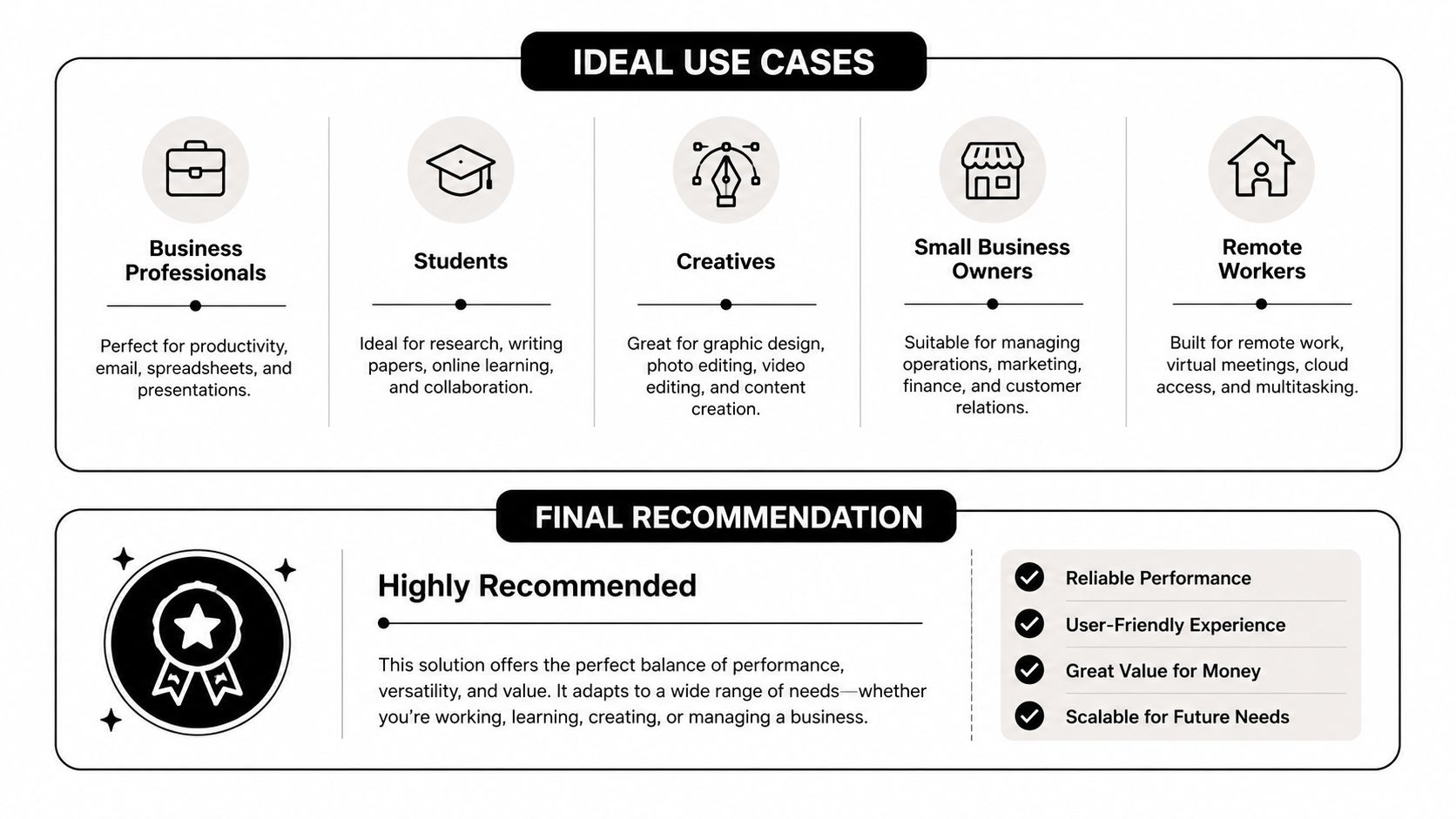
Apollo is the more natural starting hypothesis for a lean, email-led team. ZoomInfo deserves closer consideration when calling performance is central to the sales motion. Those recommendations follow the access models and directional channel evidence, not an assumption that company size alone determines fit.
The summary illustration provides a visual decision aid, not a substitute for a territory-specific pilot.
Match the choice to the bottleneck
For a founder or small outbound team, test Apollo first if accessible prospecting and email-led execution match the immediate requirement. Don't expand usage until the team can sustain its acceptance and verification process.
For an enterprise calling organization, ask ZoomInfo to demonstrate incremental value on the actual territory and personas. The premium should purchase measurable operational improvement, not a larger theoretical search space.
- International or niche targeting: Withhold a preference until the matched-market sample is complete.
- Agencies serving local businesses: Test business discovery and account context explicitly rather than assuming broad professional-contact coverage solves the requirement.
- Named-account and inbound teams: Evaluate prioritization and routing separately from contact acquisition.
Run a pilot that can reject either option
Give both vendors the same target requirements and record rejection reasons before sellers see the results. Keep outreach conditions comparable where practical, and separate data failures from messaging, timing, or offer problems.
Track accepted accounts, channel usability, manual handling time, qualified outcomes, and the full attributable cost. If a secondary provider is proposed, evaluate the incremental accepted accounts it adds, not its total returned records.
Set the decision rule before reviewing the final results. Otherwise, a compelling demonstration or enthusiastic internal sponsor can move the goalposts after the test.
The strongest Apollo vs ZoomInfo decision may be either platform, a deliberately limited combination, or neither for the immediate task. Choose the arrangement that clears your quality and governance requirements with the lowest defensible cost per useful outcome. Then make renewal depend on the same operating evidence.
CapyScout offers live-web prospect discovery, signup scoring, CRM enrichment, and account monitoring with source-backed briefs and alerts. If your Apollo vs ZoomInfo evaluation leaves a gap between finding contacts and knowing why to act, visit CapyScout and test that account-prioritization workflow against your own target list.