

Best B2B Prospecting Tools: 10 Strong Picks
Compare the best b2b prospecting tools for lists, intent, enrichment, signup screening, and local outreach, with strengths, limits, and pricing signals.
The biggest contact database isn't automatically the best B2B prospecting tool. A database can tell you who works at a company, but it may not tell you whether that company has just raised funding, started hiring, changed leadership, returned to your pricing page, or developed a reputation problem that creates a timely reason to talk.
The right choice depends on the job your team needs done. Are you building outbound lists, finding verified contact details, detecting account intent, screening inbound signups, enriching CRM records, or identifying local reputation triggers? Those workflows require different combinations of coverage, freshness, signal quality, implementation effort, pricing model, and actionability.
The research burden remains substantial. One sales prospecting statistics roundup reports that representatives spend 9% of their time on prospecting research overall, rising to 11% for B2B representatives before making a single contact. The same source reports that 42% of sales representatives lack enough prospect information before calling, while 69% of B2B buyers accepted a cold call from a new provider during the previous year. The implication is clear, better prospecting isn't only about adding records. It's about giving reps enough current context to make outreach relevant.
This list organizes the best B2B prospecting tools around those jobs rather than treating every platform as a direct substitute. CapyScout is included as the option centered on live-web buying moments and source-backed reasons to reach out, while NowFunded's perspective on AI prospecting agents provides useful context for teams considering more autonomous research workflows.
Table of Contents
- 1. CapyScout
- 2. LinkedIn Sales Navigator
- 3. Apollo
- 4. ZoomInfo
- 5. Cognism
- 6. 6sense Sales Intelligence
- 7. Bombora
- 8. UpLead
- 9. Clay
- 10. Lusha
- Top 10 B2B Prospecting Tools, Quick Comparison
- Build the Stack Around Your Next Action
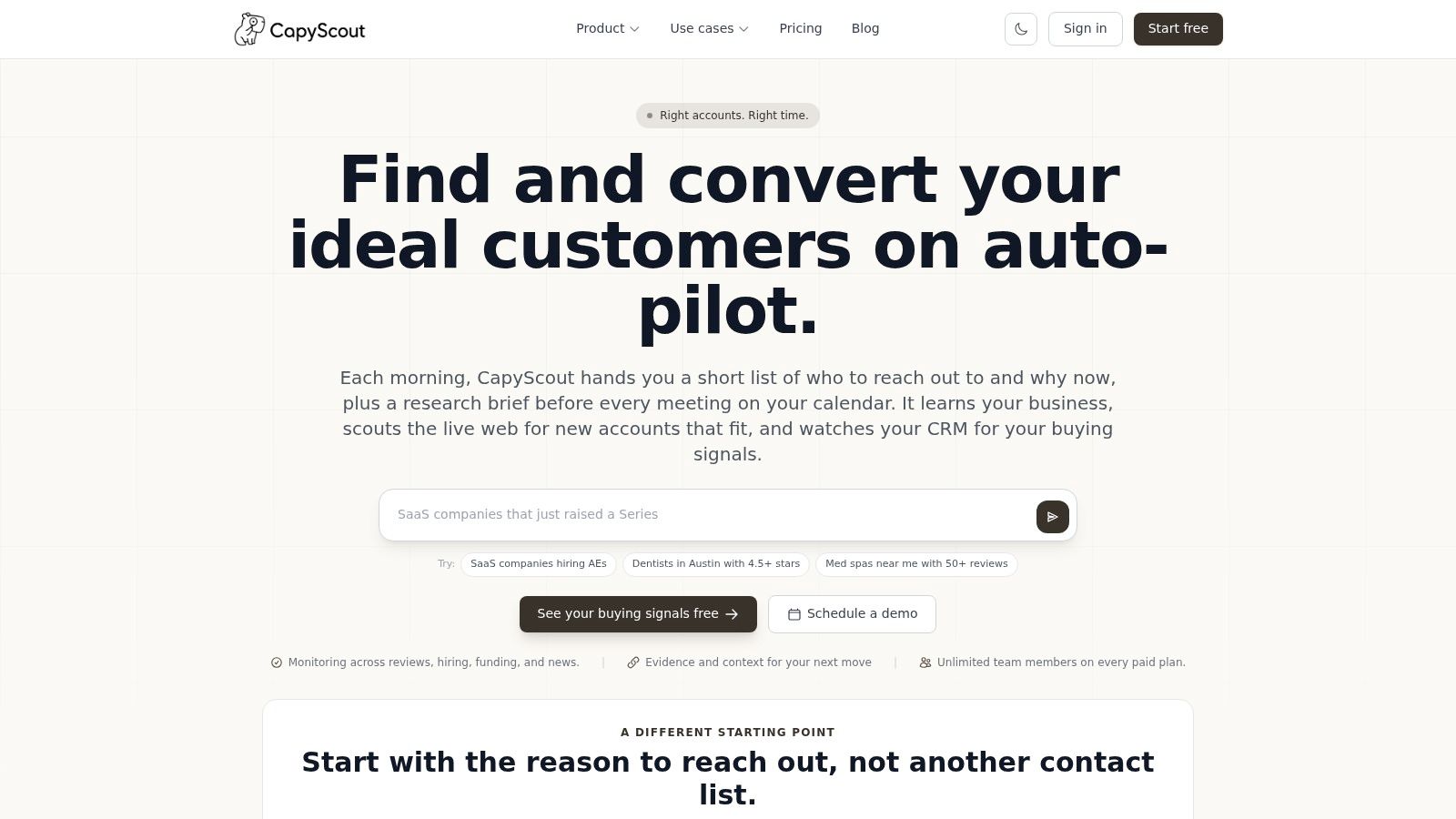
1. CapyScout
CapyScout is built around a question that most contact databases answer poorly: why should a sales representative contact this account now?
The platform watches the live web for account-level signals such as funding activity, hiring, leadership changes, technology shifts, review changes, news, and website intent. It then turns those observations into scored accounts, source-backed briefs, and suggested outreach. That makes it a different category from a static contact database. CapyScout is closer to a timing and account-intelligence layer that can sit before, beside, or on top of a CRM and data provider.
Its prospect discovery workflow accepts natural-language searches based on company type, technology, location, competitors, hiring, and niche. Saved searches can run through Autopilot, which checks watched signals and builds a scored Today queue. For a founder or small outbound team, that queue can replace the morning routine of manually checking funding announcements, job boards, company pages, reviews, and news.
Where CapyScout fits best
CapyScout is particularly useful when the team has enough potential accounts but lacks prioritization and context. It can screen inbound signups using fit, risk, and confidence scores, then suggest whether the record should go to sales, nurture, or hold. That matters because a signup isn't automatically a qualified opportunity, and routing every form fill directly to sales creates noise.
The platform also enriches CRM records daily, with bi-directional sync for HubSpot, Pipedrive, and Attio. It can write firmographics, ICP grades, and “Why now” notes into company records, while routing alerts through Slack, Teams, email, or webhooks.
Practical rule: Treat a CapyScout alert as a reason to investigate, not as permission to skip verification. Each brief cites its source, and unverifiable items are marked so a rep can check the evidence before writing.
CapyScout also covers a use case most B2B prospecting platforms ignore. Local Reputation Watch monitors Google Business Profiles for rating drops, sentiment shifts, and stalled reviews. That gives local agencies a concrete trigger for outreach instead of a generic “we can improve your marketing” pitch.
Trade-offs and commercial fit
The main trade-off is that CapyScout relies on public, live-web signals. Buyer activity hidden inside private communities, closed platforms, or paywalled sources may not appear. Teams should tune the initial searches and signal rules around their ICP rather than expecting perfect relevance immediately.
Pricing is credit-based, with unlimited team seats on paid plans and no per-seat or per-lead fees. Credit consumption, agent limits, and scan frequency still need to be modeled before purchase. A free buying-signal finder and a 7-day free trial without a credit card make it possible to test signal quality first.
CapyScout is the strongest fit when the next action depends on timing, evidence, and account context. It's less suitable as the only source for deep org charts or broad direct-dial coverage.
2. LinkedIn Sales Navigator
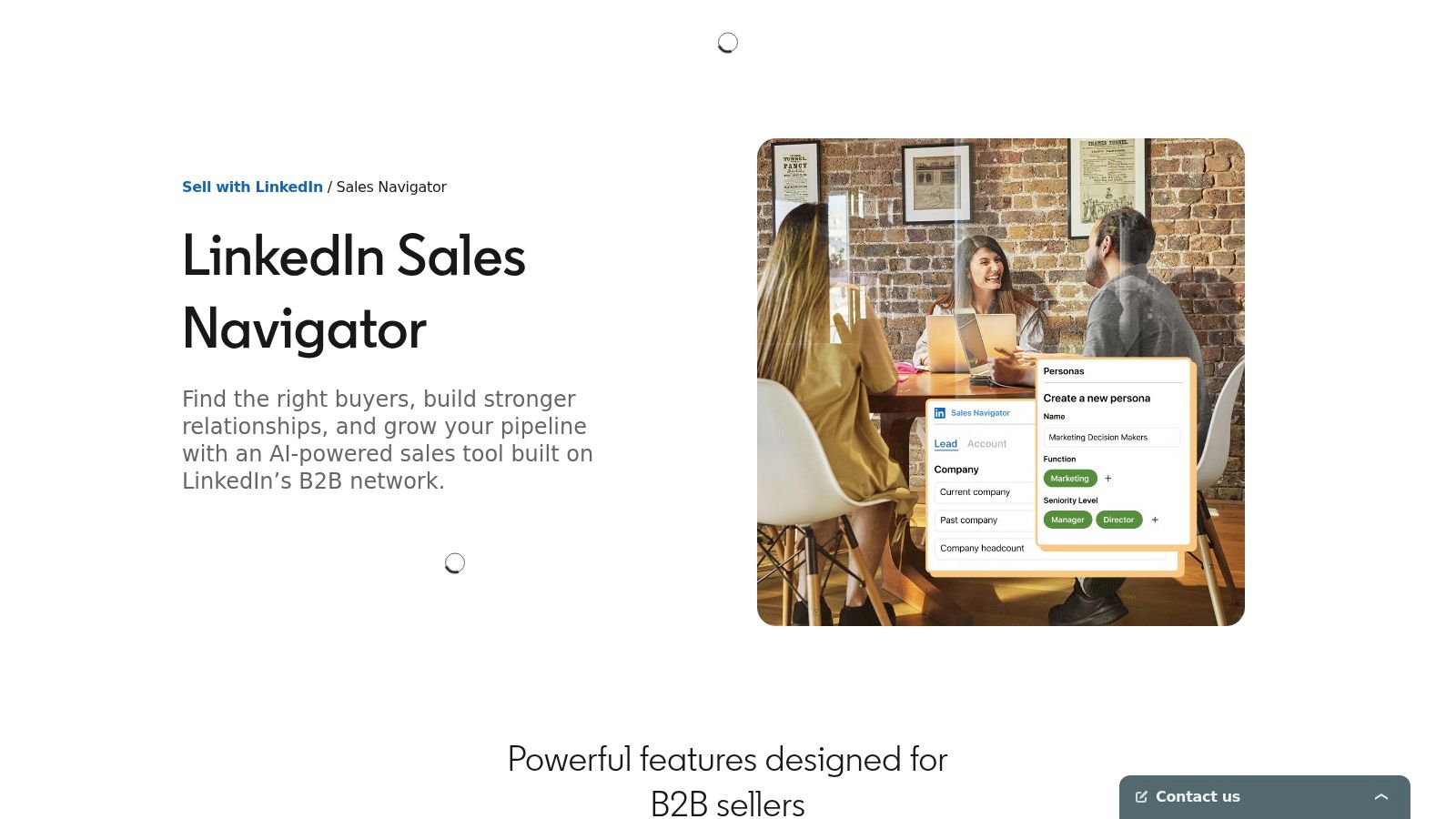
LinkedIn Sales Navigator is the natural choice for relationship-led prospecting. It works best when representatives want to discover people through professional context, follow account changes, and use LinkedIn as the primary workspace for research and engagement.
Its strength comes from first-party profile and company activity. Teams can search for leads and accounts, save them into lists, receive alerts about changes, and use buyer-intent or engagement signals tied to the LinkedIn ecosystem. Job changes, promotions, company updates, and shared connections can provide useful conversation openings that a conventional database may miss.
Sales Navigator also supports 50 InMail credits per user each month across its tiers, as documented in the LinkedIn search guide for founders. Saved lead and account lists can reach 10,000 records per user, which is useful for account-based monitoring rather than one-off list exports.
The important limitation is scope. Sales Navigator is primarily a discovery and relationship platform, not a complete contact-data system. Email addresses and phone numbers generally require another provider, and the most advanced CRM synchronization is reserved for the higher tier. Pricing is opaque and can vary by region and contract, with the top tier requiring a sales conversation.
If your team's motion depends on warm introductions, profile changes, and LinkedIn engagement, Sales Navigator can be the front door. It shouldn't be mistaken for a replacement for enrichment, verification, or outbound execution.
Choose it when representatives already spend meaningful time on LinkedIn and want better account visibility there. Pair it with Apollo, Cognism, UpLead, or Lusha when the workflow also requires contact details and structured outreach.
3. Apollo
Apollo combines contact and company data with sales engagement, which makes it one of the most practical choices for teams that want fewer disconnected subscriptions. Its core workflow is straightforward: define an audience, find contacts, enrich records, add prospects to sequences, and manage calls or follow-up from the same environment.
That breadth is Apollo's main advantage. Startups and scale-ups can use its filters, browser extension, sequences, dialer, CRM integrations, and AI assistance without assembling a separate database, sequencer, and research layer. Its self-serve onboarding also lowers implementation effort compared with enterprise ABM platforms.
Best for contact-led outbound
Apollo works best when the target market can be described through recognizable firmographic and role filters. It's effective for finding people by company, seniority, department, geography, industry, and related attributes, then moving them directly into outreach.
The trade-off is that contact volume and timing aren't the same problem. Apollo can help a rep find a likely buyer, but a database row doesn't necessarily explain why that person should respond today. Teams that need funding, hiring, review, or website-intent context may need to add a separate signal layer. Apollo's waterfall enrichment can improve reach by checking multiple sources, but each additional enrichment path complicates credit planning.
Credit rules also matter. Consumption can vary by action, data type, and workflow, so teams should test a representative account set before committing to a large plan. International mobile coverage may also vary by market and segment, which makes regional validation more important than relying on the size of the overall database.
Apollo is a strong foundation for list building plus outreach, especially for lean teams. It becomes less complete when the bottleneck is account prioritization rather than contact access. For teams already using CapyScout, the Apollo integration can connect a timing layer with a contact and engagement workflow.
4. ZoomInfo
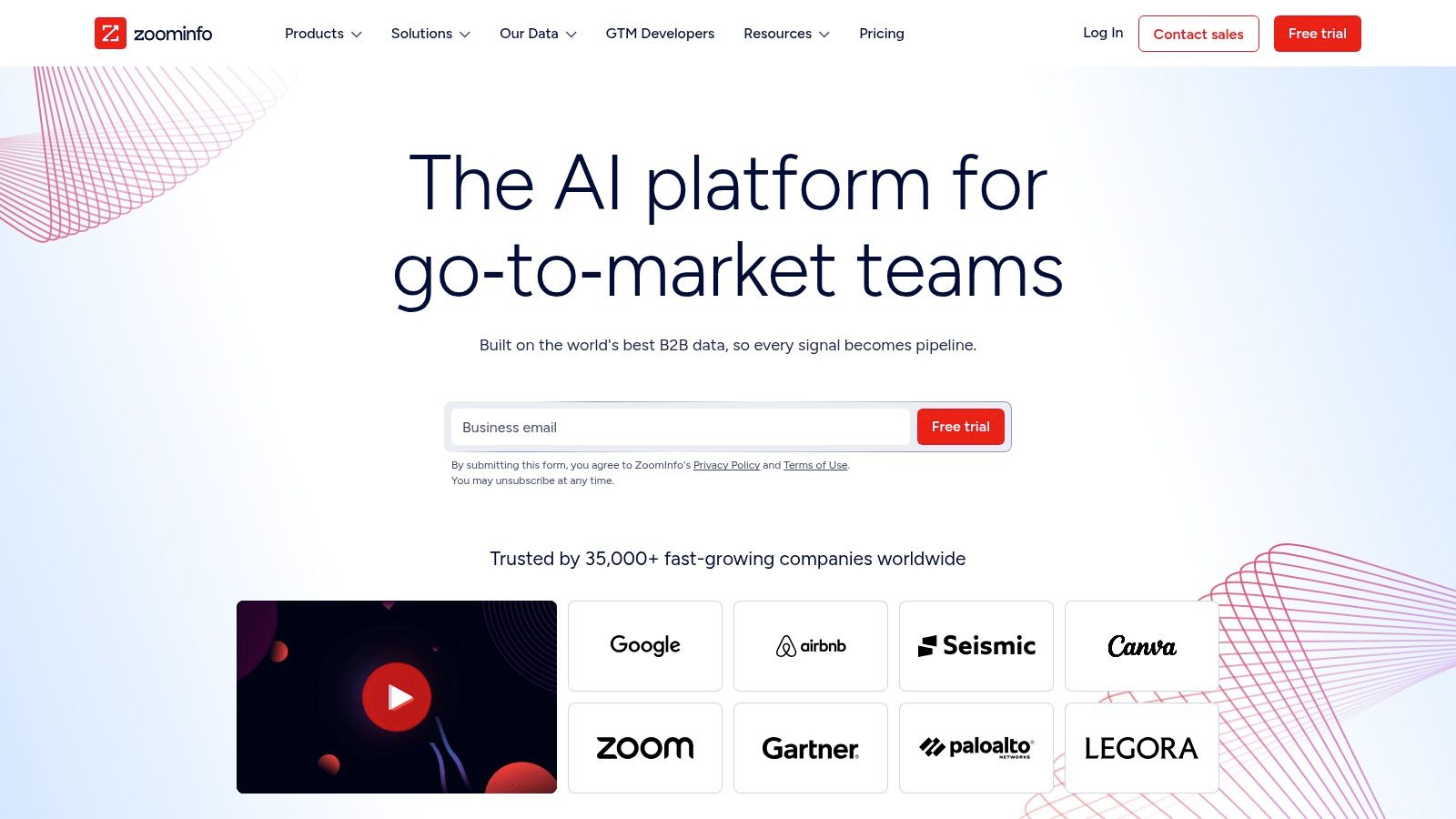
ZoomInfo is designed for organizations that need broad account intelligence, structured buying committees, governance, and administrative control. It belongs in the enterprise data and ABM category rather than the lightweight prospecting category.
Its platform spans sales, marketing, operations, talent, and Copilot workflows. Teams can work with company and contact records, firmographics, technographics, org charts, intent partnerships, and enterprise integrations. The value is not just the ability to download a contact. It's the ability to map a complex account, understand stakeholder relationships, and coordinate multiple go-to-market teams around the same data.
Enterprise coverage comes with enterprise friction
ZoomInfo is a better fit than a small self-serve database when sales teams sell into large organizations and need formal administration. Governance controls, permissions, integrations, and account-level views can matter as much as raw contact coverage when many representatives and marketing users share the same system.
The cost is predictability. List pricing isn't published, and the final contract can depend on seats, modules, credits, integrations, and usage. A team should request a clear breakdown of what is included rather than evaluating the headline platform alone. Add-ons can materially change the commercial picture.
ZoomInfo also doesn't automatically solve the “why now” problem. Its intent partnerships and account intelligence can help prioritize accounts, but representatives may still need another layer to connect an account change to a source-backed outreach reason. That distinction is important for teams comparing ZoomInfo with live-web monitoring.
Procurement test: Ask for the exact export limits, included modules, renewal terms, credit rules, and CRM functionality in writing. “Platform access” doesn't necessarily mean every capability appears in the same package.
ZoomInfo is the right choice for mature enterprise ABM, large buying committees, and teams that can support implementation. It's a poor fit for a founder who needs a quick, transparent way to find a handful of relevant accounts. CapyScout can complement it through the ZoomInfo integration, adding live signals and source-backed timing to established account data.
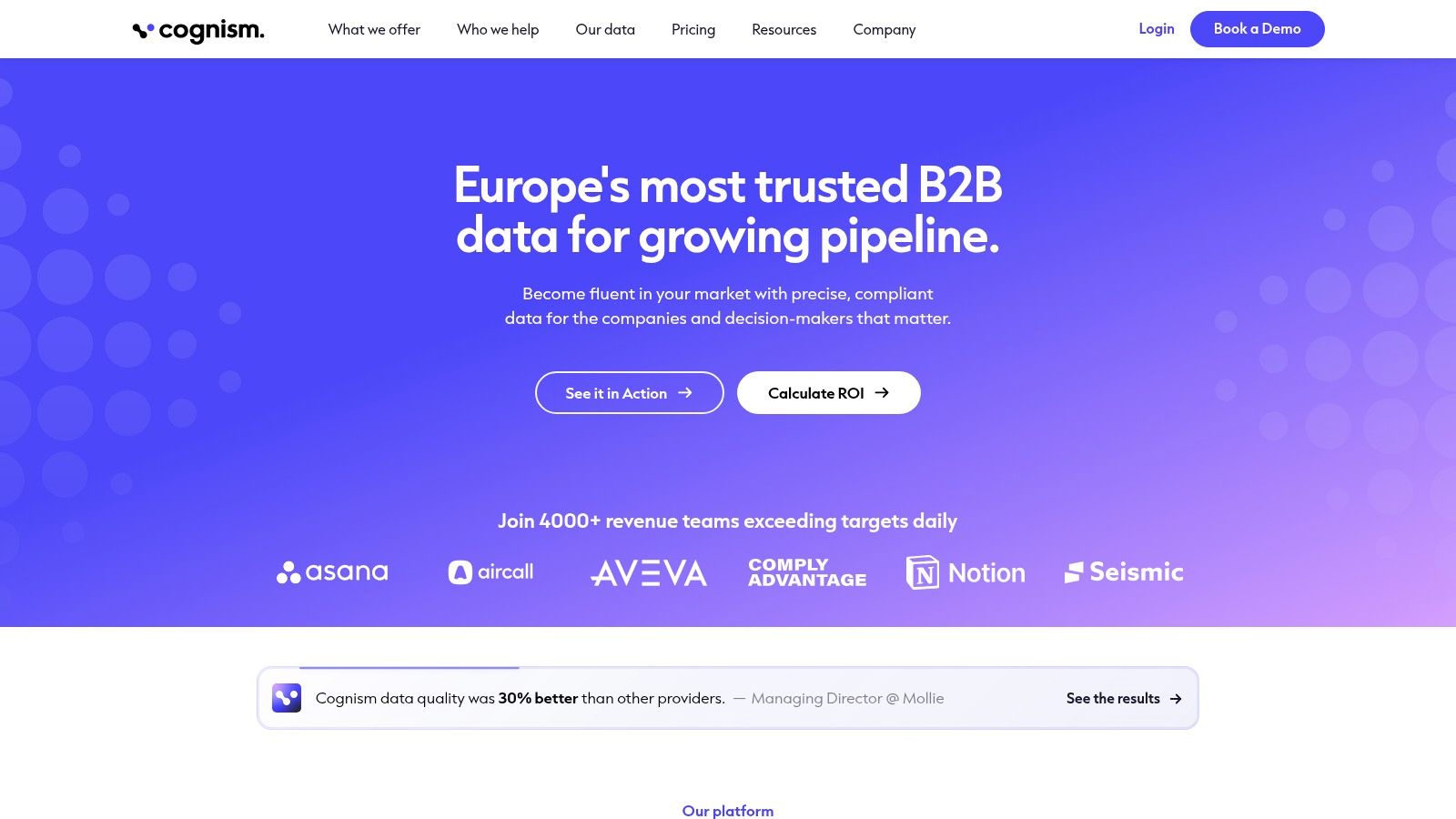
5. Cognism
Cognism is aimed at teams that need international B2B data, particularly reliable phone coverage for UK and European prospecting. Its positioning is compliance-first, with verified mobile data, on-demand verification, and processes designed for regulated outreach environments.
That makes Cognism a specialized choice rather than a universal replacement for every prospecting platform. A team running phone-led outbound in EMEA may value verified mobile access and compliance controls more than a broad collection of lower-priority records. The platform also offers CRM enrichment, API access, and intent functionality through higher packages.
The geography changes the decision
Data quality is regional. A provider that performs well for European mobile numbers may not be the strongest choice for a US-heavy motion, and a team shouldn't assume that global coverage is uniform across industries, seniority levels, or company sizes.
Cognism's credit model is relatively easy to understand at a high level, with a credit used to reveal a contact. However, the platform is quote-based, and plans can include limits around intent topics, enrichment, seats, or add-ons. Smaller teams may find the commercial structure less flexible than a self-serve database.
The implementation effort is moderate. Reps can use prospecting packages directly, while RevOps teams can connect the API or build automated scoring workflows. The bigger operational question is what happens after a number is revealed. Without clear territory rules, suppression logic, and an outreach sequence, better phone coverage can just produce a larger call queue.
Cognism belongs in a stack where phone accuracy, international coverage, and compliance posture are central requirements. It doesn't replace a timing platform, CRM prioritization process, or broader account research workflow. Pair it with live signals when your team needs to know which European accounts deserve attention before spending credits on contact discovery.
6. 6sense Sales Intelligence
6sense Sales Intelligence is built for account-based teams that need to decide which accounts should receive attention first. It blends third-party intent, website deanonymization, predictive modeling, technographics, psychographics, and AI-guided recommendations into a broader marketing and sales workflow.
That makes 6sense different from Apollo or Lusha. Those platforms are often used to find contact details and build lists. 6sense is more concerned with account prioritization, buying stages, and coordinating action across marketing and sales.
Its predictive scoring and dashboards can help teams rank accounts against a defined target universe. Sales Copilot and alerts then translate that ranking into recommended actions, while company and people search can support the next research step. Data credits release or export emails, phones, and enriched records, so contact access remains part of the workflow, but it isn't the central reason enterprise teams buy the platform.
Strong fit requires operating maturity
6sense takes more implementation effort than a self-serve prospecting database. Teams need a clear ICP, account ownership model, CRM hygiene, campaign process, and agreement about how representatives should respond to intent. Without those conditions, predictive scores can become another dashboard that nobody uses.
Pricing is quote-only and generally positioned above data-only tools. The commercial evaluation should include model setup, integrations, data credits, user access, and the internal time required to operate the program. A successful deployment also depends on marketing and sales using the same account definitions and stages.
6sense is a strong choice for enterprise ABM and coordinated revenue teams. It may be excessive for a small team whose main problem is finding verified emails or identifying a few timely account changes. It also shouldn't be treated as proof that an account is ready to buy. Intent indicates where to investigate, then people still need to validate the account and identify the right stakeholder.
7. Bombora
Bombora is a third-party intent-data platform centered on Company Surge. It scores domains based on content consumption around relevant topics, helping marketing and sales teams identify accounts researching subjects connected to their products.
Bombora is best understood as an intent input, not a complete prospecting workflow. It can inform account-priority tiers, advertising audiences, and outreach strategy, but it doesn't automatically reveal the specific person responsible for a purchase or provide a source-backed explanation of the event that triggered the score.
The platform's broad partner ecosystem is a major advantage. Company Surge data can flow into ABM platforms, marketing systems, CRM workflows, and other revenue tools. That makes it useful for organizations that already have operational infrastructure and want to add an account-level research signal to existing processes.
The signal is also probabilistic. Content consumption can indicate research activity, but it doesn't establish purchase timing, budget, buying authority, or competitive preference. Sales teams should combine it with firmographic fit, known contacts, website activity, first-party engagement, or a more concrete company event.
The operating process matters more than the score
Bombora requires a response model. Someone must define which topics matter, what score or change is meaningful, which accounts should be routed to sales, and what message is appropriate. Without those rules, intent data often creates a larger list without improving prioritization.
Pricing is quote-based, and the investment should be evaluated alongside delivery cadence, topic coverage, account scope, integrations, and any additional modules. Teams should also test whether their target geography and niche generate enough useful signal to justify the contract.
For a deeper explanation of how intent fits into a prospecting workflow, see what intent data means in B2B. Bombora is the stronger fit when a company needs standardized third-party research activity at scale. CapyScout is the better contrast when the priority is live public events, source-backed reasons, and a daily action queue.
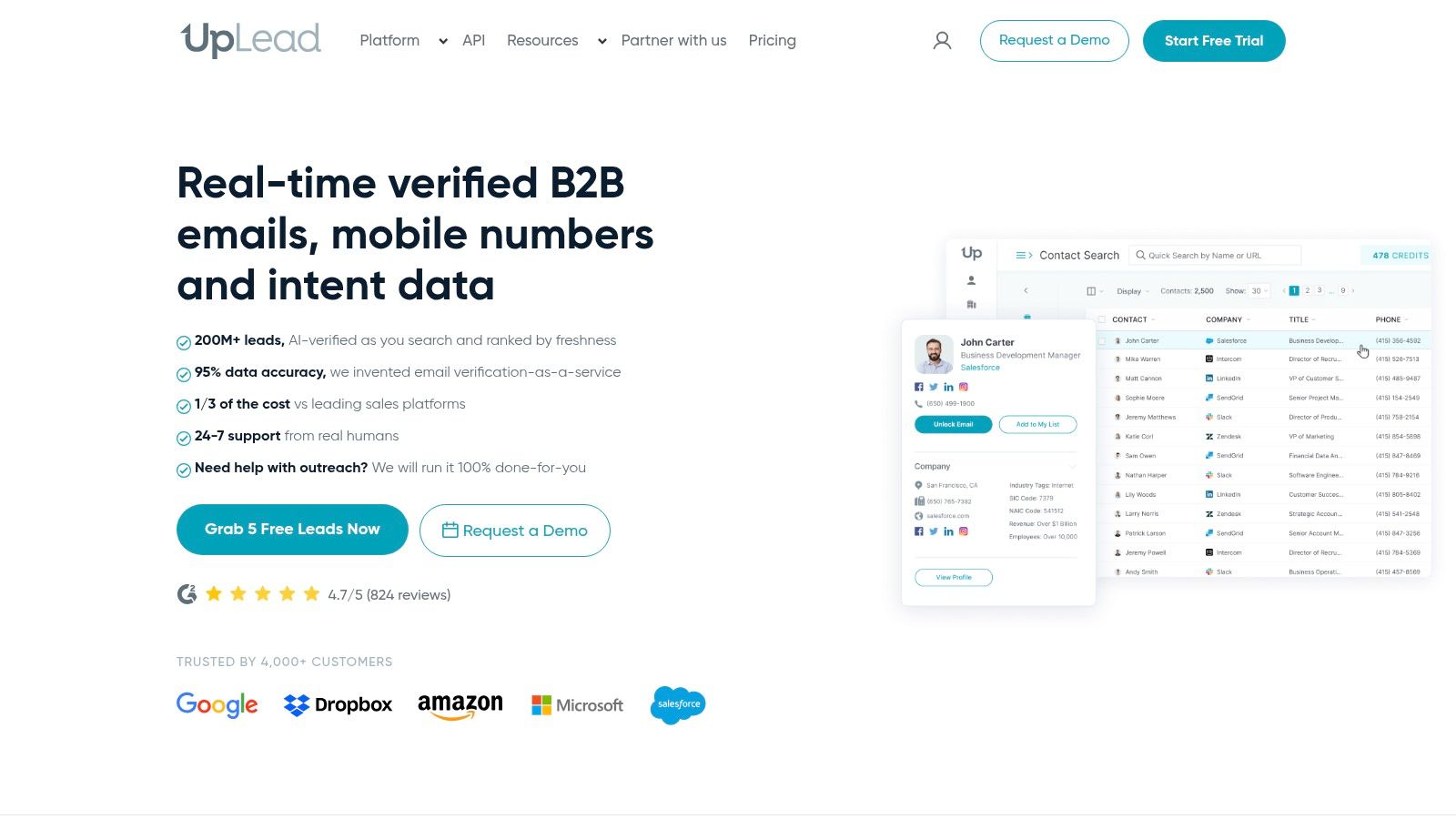
8. UpLead
UpLead is a practical contact and company database for teams that want verified emails, technographics, straightforward filters, and relatively simple CRM connections. It sits between lightweight lookup tools and larger enterprise data platforms.
Its main job is contact-led list building. Reps can define an ICP, use company and technology filters, find records, and push them toward CRM or sales engagement workflows. The Chrome extension supports research during everyday browsing, while enrichment and Prospector APIs give technical teams a way to connect the data to custom processes.
A useful fit for focused teams
UpLead is most attractive when the buyer already knows the target account shape and needs usable contact details without adopting a full ABM system. Clear packaging and credit-based plans can make initial testing easier than a sales-negotiated enterprise contract.
The trade-off is depth. Higher-tier or custom plans may be required for buyer intent, advanced filters, full API access, or heavier enrichment. Teams that rely on direct dials should test the phone coverage specifically, rather than assuming verified email performance extends to every field.
UpLead also doesn't provide the same live timing layer as CapyScout. It can help answer who works at the company, while CapyScout is designed to help answer which company has a current public reason to receive outreach. Those jobs can work well together when a signal-first workflow identifies the account and UpLead supplies or enriches the contact record.
Implementation is relatively light. A small sales team can get started with filters and a CRM integration, while RevOps can use the API for recurring enrichment. The main financial risk is credit usage, especially when a team applies broad searches before defining the fields it needs.
Choose UpLead when data access is the bottleneck and your market is easy to describe. Choose a more advanced ABM or intent platform when the hard part is deciding which accounts deserve attention.
9. Clay
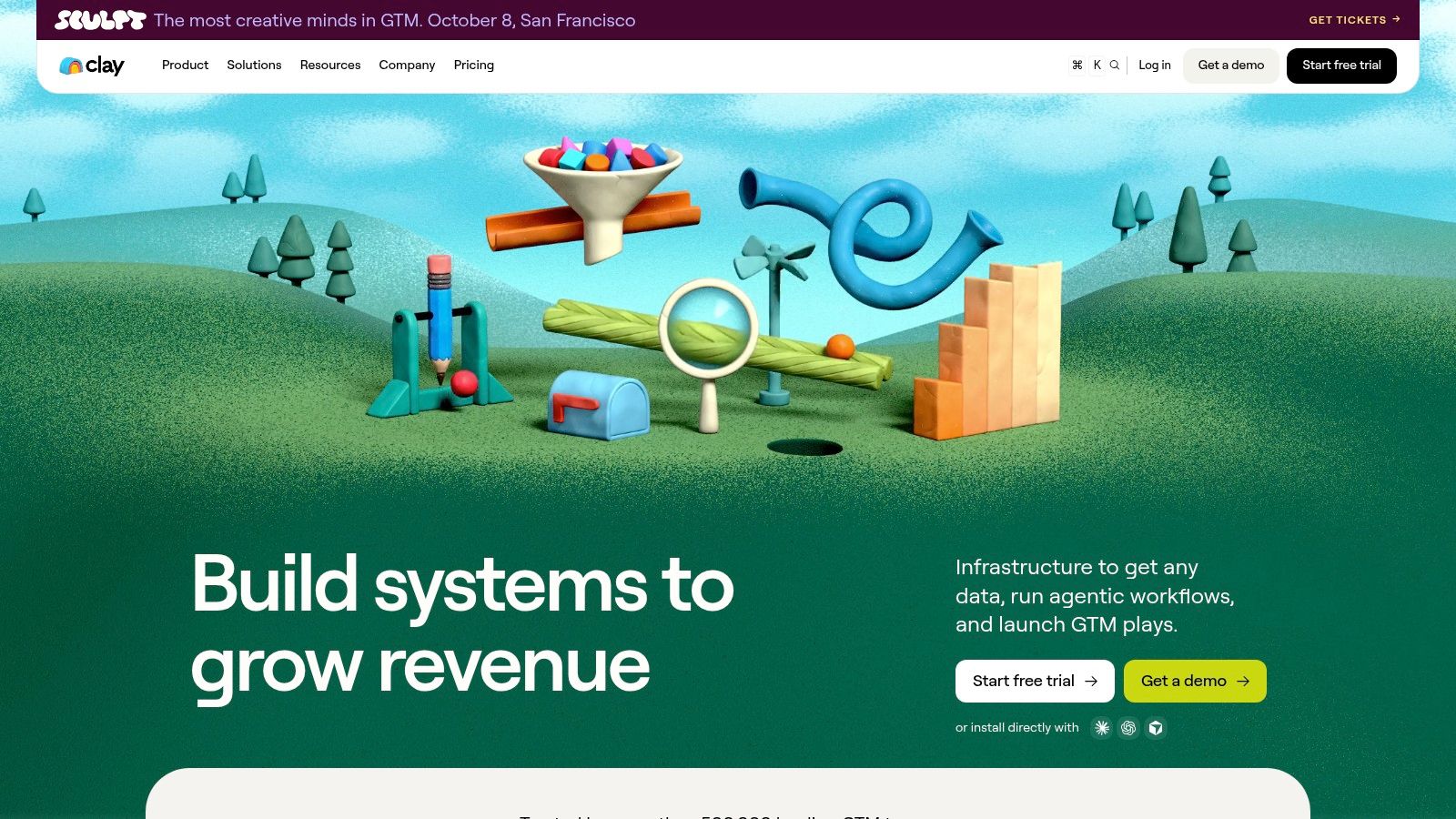
Clay is a data orchestration workspace for teams that want to build their own prospecting logic. Rather than depending on one database, users can chain enrichment providers, web research, AI prompts, scoring rules, and destination integrations into visual workflows.
That flexibility makes Clay powerful for unusual ICPs. A team can combine firmographic filters with technology detection, hiring research, review data, intent providers, and custom AI research. Waterfall enrichment can also attempt multiple providers when the first one doesn't return a usable result.
Flexibility transfers work to the operator
Clay's advantage is control. The team decides which sources to use, what order to try them in, which fields matter, how to score a record, and where to send the result. Community templates and documentation can shorten the path from idea to workflow, while webhooks, APIs, and integrations support more advanced automation.
The cost is operational ownership. Someone must design the workflow, monitor errors, review provider output, maintain prompts, and understand how actions and data usage accumulate. A workflow that calls several enrichers can become expensive without improving the final list, especially if the team hasn't defined the minimum information needed to qualify an account.
Clay also requires a clear destination. The output may go to a CRM, sales engagement platform, Slack, or a custom system, but the routing rules need to be designed. This is different from an out-of-the-box prospecting tool that provides a ready-made queue.
Build-versus-buy test: Use Clay when your prospecting logic is genuinely distinctive and someone owns data operations. If the team only needs verified contacts or timely account alerts, a more focused tool will usually require less maintenance.
Clay is a strong orchestration layer beside Apollo, ZoomInfo, Cognism, Bombora, or CapyScout. It can extend those systems, but it isn't automatically the fastest route to a reliable workflow for a small sales team.
10. Lusha
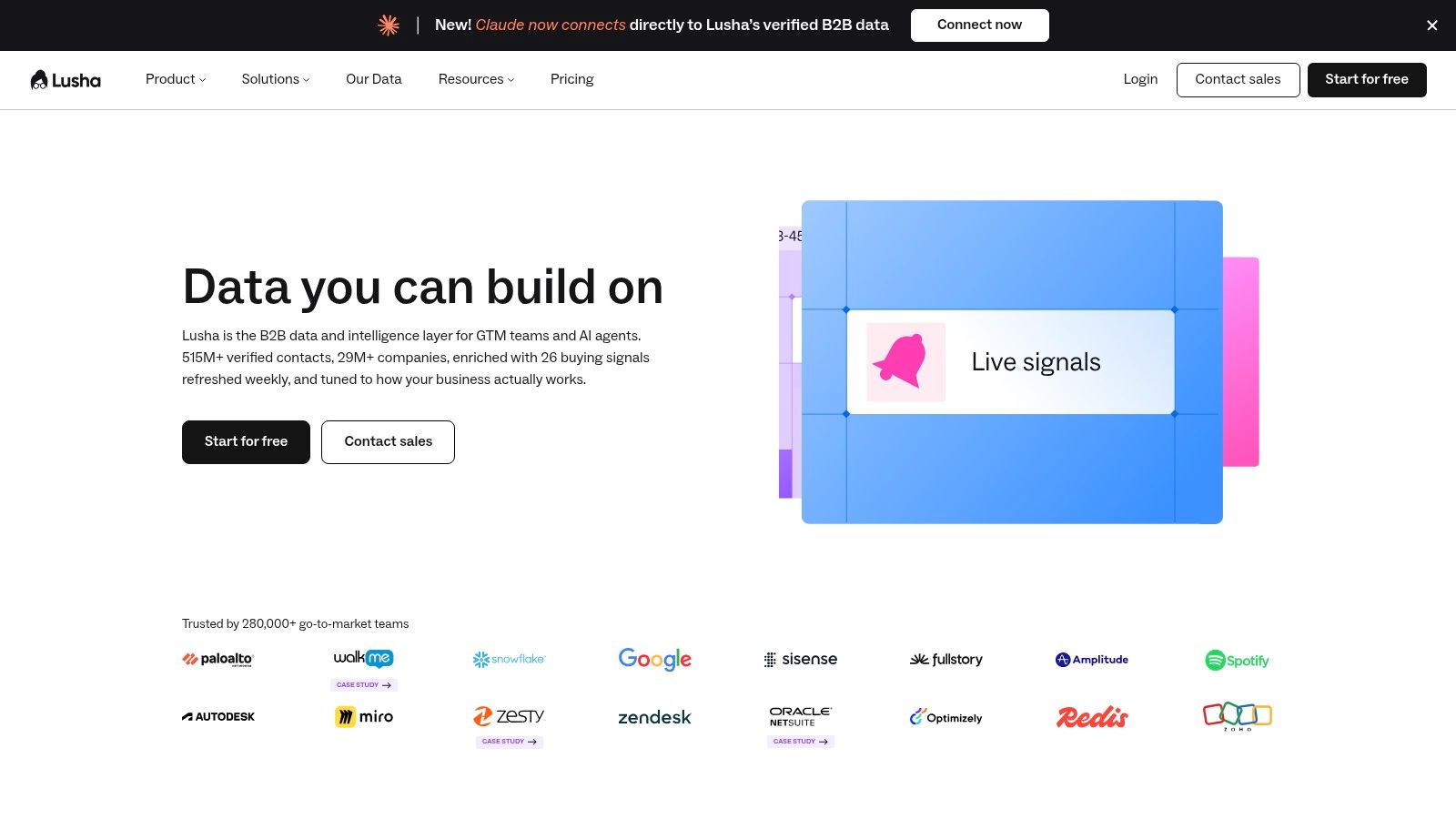
Lusha focuses on pragmatic contact discovery. Its browser extension, workspace, API, audience features, and CRM integrations help small teams find verified emails and phone numbers without adopting a full enterprise account-intelligence platform.
The credit model is easy to understand at a high level. Verified emails consume fewer credits than phone numbers, so a team can estimate spend by looking at the mix of fields its representatives use. Lusha also offers a free plan with up to 40 credits per month, which gives a small team a way to validate basic fit before making a larger commitment.
Lusha is a good choice when the target accounts are already known and the team needs a quick lookup workflow. A representative can research a person in the browser, reveal the required detail, and move the record into a CRM or sales engagement process. Shared plan structures can also suit small teams that want to manage one credit pool rather than purchase a large enterprise contract.
Where Lusha stops
Lusha's limitations become clearer when the prospecting problem moves beyond contact access. It doesn't provide the same account-level live-web monitoring as CapyScout, the predictive ABM environment of 6sense, or the enterprise org-chart depth associated with ZoomInfo. International coverage can also vary by region, so teams should test their own market before scaling.
Phone-heavy motions need particular attention. Because phone reveals consume more credits, a campaign can spend faster than an email-first workflow. Teams should model the actual ratio of emails to phones, account for possible overages, and test whether the returned numbers are usable in the countries they target.
Lusha belongs in the quick list-building and contact lookup layer. It's often a sensible starting point for small outbound teams, but it won't tell a rep why an account is ready for a conversation. Add a signal or research layer when relevance and timing are more important than lookup speed.
Top 10 B2B Prospecting Tools, Quick Comparison
| Product | Core features | Unique selling points (✨) | Quality (★) | Pricing / Value (💰) | Target (👥) |
|---|---|---|---|---|---|
| CapyScout 🏆 | Live-web prospecting, signup screening, CRM enrichment, Autopilot, outreach drafts | Source-backed alerts & briefs; website intent; Local Reputation Watch ✨ | ★★★★☆ | Credit-based, unlimited seats, 7‑day free trial 💰 | Founders, SDRs, RevOps, local agencies |
| LinkedIn Sales Navigator | Advanced lead/account search, saved lists, InMails, alerts | Native LinkedIn intent & best-in-class job/title signals ✨ | ★★★★☆ | Region/contract pricing; InMail credits 💰 | Teams living in LinkedIn; recruiters, SDRs |
| Apollo | Large contact/company dataset, sequences, dialer, AI assistant | All‑in‑one sales OS: data + engagement in one place ✨ | ★★★★☆ | Credit model for data; self‑serve tiers 💰 | Startups/scale‑ups needing integrated stack |
| ZoomInfo | Deep firmographics, org charts, technographics, intent partners | Enterprise-grade governance, org intelligence ✨ | ★★★★☆ | Quote-only; enterprise TCO can be high 💰 | Large teams running ABM & multichannel plays |
| Cognism | Global contacts, premium mobile, on‑demand verification | GDPR-aligned processes; strong EU/UK mobile accuracy ✨ | ★★★★☆ | Quote-based; credits + verification fees 💰 | EMEA teams focused on phone outreach |
| 6sense Sales Intelligence | Predictive scoring, web visitor ID, AI-recommended actions | ABM-centric predictive intent + sales/marketing alignment ✨ | ★★★★☆ | Quote-only; premium pricing 💰 | ABM-mature GTM teams (marketing + sales) |
| Bombora (Company Surge) | Company Surge intent scores, API/CSV delivery, taxonomy | De facto third‑party intent standard for ABM ✨ | ★★★☆☆ | Quote-only; often mid‑five‑figure deals 💰 | Marketing/ABM teams prioritizing research |
| UpLead | Verified emails, technographics, enrichment, CRM sync | Verified-email guarantees; simple credit plans ✨ | ★★★★☆ | Credit-based; SMB-friendly plans 💰 | SMB & mid‑market SDRs and ops |
| Clay | No-code data orchestration, enrichment chains, LLM steps | Highly flexible workflows; multi-source validation ✨ | ★★★★☆ | Credit + token pricing; depends on stack usage 💰 | Ops/GTMs building custom prospecting flows |
| Lusha | Verified emails & phones, Chrome extension, API | Pragmatic credit model for quick dials & lists ✨ | ★★★☆☆ | Credit-based; free tier available 💰 | Small teams needing fast phone/email access |
Build the Stack Around Your Next Action
The best B2B prospecting tools don't all compete for the same job. LinkedIn Sales Navigator is the logical choice for relationship-led discovery, saved account monitoring, and professional-network context. It works especially well when representatives create opportunities through introductions, profile changes, and ongoing LinkedIn engagement.
For contact-led list building, Apollo, UpLead, and Lusha cover different levels of breadth and operating complexity. Apollo is the broadest all-in-one option because it combines data with sequences, calling, and enrichment. UpLead is a focused choice for verified-email and company research workflows. Lusha is practical for small teams that need quick browser-based lookups and a comprehensible credit model.
Geography can change the decision. Cognism deserves priority when UK and European phone coverage, verification, and compliance processes are central to the motion. A team that mainly sells through email in the United States may prefer a different provider, but a phone-led EMEA operation should validate Cognism before assuming a general-purpose database will perform equally well.
Enterprise teams should separate account prioritization from contact access. ZoomInfo is suited to large-company intelligence, org charts, governance, and scaled account workflows. 6sense is better when marketing and sales need predictive prioritization across a defined account universe. Bombora adds third-party topic research signals, but the team still needs contact identification and a clear process for acting on the signal.
Clay belongs in the orchestration layer. It's the right choice when the ICP requires custom research, multiple providers, AI steps, and routing logic that an out-of-the-box platform can't express. The price of that flexibility is internal ownership. Without someone maintaining the workflows, the system can become another source of inconsistent data.
CapyScout occupies a different position. Choose it when the priority is finding account-level timing, screening inbound signups, keeping CRM context current, or combining B2B and local signals. Its live-web approach can surface funding, hiring, leadership, website, news, and reputation changes, then attach sources and suggested next actions. That's particularly useful when reps don't need another frozen export. They need a defensible reason to start a conversation today.
The broader market is moving toward operational infrastructure rather than occasional list purchases. One market summary reports that 68% of B2B sales professionals used prospecting software daily in 2025, compared with 45% in 2020, and that 74% said it improved lead quality, according to Salesforce's prospecting tools overview. Adoption alone doesn't determine the right purchase. The tool must fit the action your team can execute consistently.
Use a practical evaluation sequence:
- Define the signal: Decide whether the missing input is a contact, account fit, intent, timing, enrichment, or local reputation event.
- Set the geography: Test the countries, industries, company sizes, and roles that your representatives target.
- Estimate consumption: Model credits, seats, agents, exports, enrichment steps, integrations, and contract commitments.
- Test representative accounts: Check current employment, contact usability, duplicates, signal relevance, source quality, and CRM mapping.
- Connect the destination workflow: Make sure a qualified record reaches the CRM, queue, alert channel, or outreach tool where someone will act.
- Measure actionability: Ask whether representatives receive a clear, verifiable reason to contact the account, not merely another name on a list.
A large database can increase the number of possible prospects. A well-designed stack helps your team decide which account deserves attention, who should receive the message, and what makes the timing credible.
CapyScout combines live-web prospect discovery, inbound signup scoring, daily CRM enrichment, account monitoring, local reputation alerts, and source-backed outreach briefs in one workflow. If your team needs clearer timing and verifiable reasons to contact accounts, visit CapyScout to test its buying-signal finder and free trial.