

Market Segment Pricing for B2B SaaS Growth
Master market segment pricing for B2B SaaS. Learn to align pricing tiers with live account signals, test willingness to pay, and govern discount strategies.
The most popular advice about market segment pricing is also the least useful: divide accounts into SMB, mid-market, and enterprise, then attach a price to each bucket. Firmographics can help organize a pipeline, but they rarely explain why two companies with similar revenue make very different buying decisions.
A better pricing model follows behavior, context, and timing. The account that just hired a revenue operations leader, added a new sales tool, returned to your pricing page, or opened a second location may have a different willingness to pay than a larger account with no active initiative. Pricing tiers should reflect that difference without turning every quote into an opaque negotiation.
Price segmentation has a strong academic foundation. Research by Bolton and Myers in the Journal of Marketing found that price elasticities vary by service quality, service type, and support level, and that horizontal segments can exist across countries. The practical implication is straightforward: the same service can rationally carry different packaging or price levels when customers expect different outcomes and levels of support.
Table of Contents
- Moving Beyond Static Demographics in Pricing
- Building a Reliable Market Index Benchmark
- Aligning Pricing Tiers with Live Account Signals
- Testing Willingness to Pay Across Segments
- Enforcing Pricing Governance in the CRM
- Launching and Maintaining Your Pricing Model
Moving Beyond Static Demographics in Pricing
Employee count and annual revenue are useful filters, not pricing strategies. A company with a large workforce may buy cautiously for a narrow use case, while a smaller firm may pay for speed, risk reduction, or a business-critical workflow. If your pricing page treats those accounts as interchangeable, it hides the variable that matters most, the value the buyer believes your product will create now.
The traditional demographic model also misses how buyers trade between premium and value options. NIQ reports that growth is concentrating at the premium and value ends, while one-third of consumers switch to lower-priced options and buy the promoted brand when value isn't obvious. That finding comes from NIQ's Tale of Two Consumers report, and its lesson applies to B2B buying as well. Budget authority doesn't guarantee premium willingness to pay. A buyer may pay more for trusted implementation during a high-risk rollout, then choose a lower-cost alternative for a routine task.
McKinsey describes a more complicated path to purchase in which value matters across income segments and categories. For SaaS, the equivalent mistake is assuming that an enterprise account always wants the most complete tier. The account may value governance, security, and support in one buying occasion, but care primarily about a fast deployment and limited user group in another.
Replace labels with observable buying context
A useful segment definition combines stable account facts with current behavior:
- Account economics: Revenue, location, operating model, and existing technology provide context, but shouldn't determine the quote alone.
- Use case intensity: A product used across a critical workflow can support a different package from the same product used experimentally.
- Perceived risk: Compliance, migration complexity, revenue exposure, and implementation dependency often increase the value of support.
- Timing: A new initiative, leadership change, hiring plan, or competitive threat can create urgency that static records can't show.
- Value clarity: Buyers who can connect the offer to a specific outcome are less likely to trade down just because a cheaper option exists.
An ideal customer profile framework becomes more useful than a persona document. The ICP should describe the conditions under which an account is likely to need the product, not just the kind of company it is.
Practical rule: Use firmographics to decide who belongs in the market. Use behavior and context to decide which offer belongs in front of them.
Price the occasion, not just the company
Consider a SaaS platform with three packages. A small agency facing a sudden client reporting requirement may need automation, onboarding, and priority support. A larger agency with established processes may only need additional seats. Pricing by company size alone either overcharges the first account for features it doesn't need or underprices the second account despite its wider operational value.
The middle market creates the hardest version of this problem. These buyers aren't always premium buyers, but they aren't purely bargain-driven either. Segment pricing should account for occasion, perceived risk, and willingness to trade off elsewhere, rather than treating income or company size as a proxy for value.
That doesn't mean every buyer receives a unique price. It means your tiers should map to meaningful differences in usage, support, risk, and outcomes. A transparent package with clear eligibility rules is usually easier to sell and defend than a long list of discretionary discounts.
Building a Reliable Market Index Benchmark
A segment price is only meaningful relative to a market reference. Without that reference, teams often compare their public list price with a competitor's promotional offer, or compare a monthly SaaS fee with a contract that includes implementation and support. The result looks like competitive intelligence, but it isn't a comparable price set.
A reliable market index starts by defining what belongs in the comparison. Market-based pricing guidance from Umbrex recommends normalizing prices and benchmarking them against the market median or a defined competitive average. It also separates list price, promotional price, and landed price, because fees, terms, shipping, and channel conditions can change the final amount the customer pays.
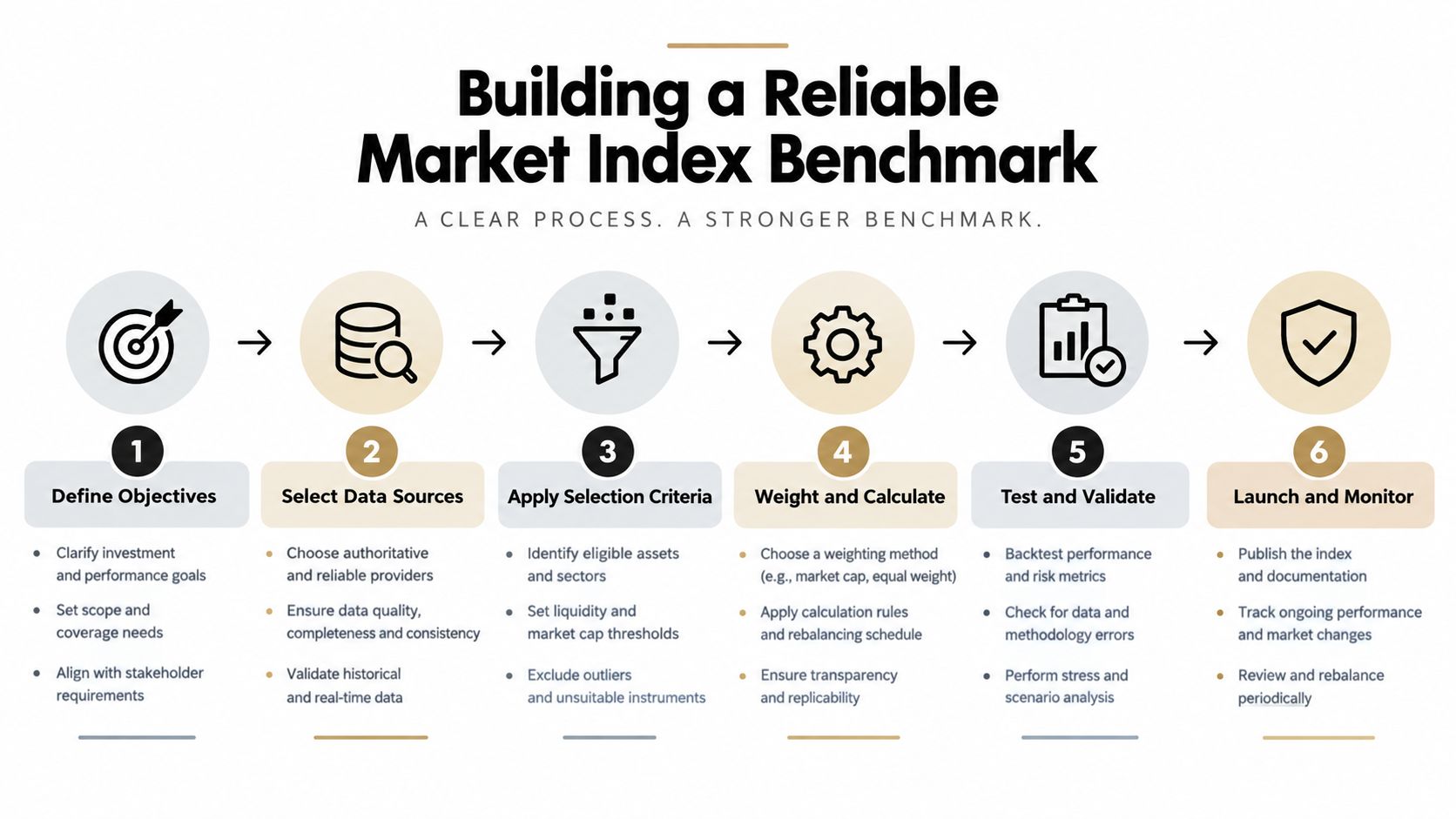
Six steps to a usable benchmark
Define the market boundary. Specify the category, region, customer type, channel, contract structure, and period you're comparing. A local service offer and a global enterprise platform shouldn't share a reference set merely because they solve a related problem.
Collect comparable offers. Record the published list price, the visible promotion, included usage, support level, onboarding, contract term, and any mandatory fees. Keep the source and capture date with every observation.
Separate price layers. Store list price, promotional price, and landed price as separate fields. For a SaaS product, landed price may include implementation or required services. For a physical or channel product, it may include shipping, fees, and payment terms.
Normalize the unit. Compare like with like, such as price per account, workflow, location, user group, or service period. Don't force different packaging into a false unit if the underlying value metric isn't comparable.
Calculate the market index. Divide your normalized price by the selected market benchmark, then express the result as an index. An index above the benchmark indicates a premium position, an index near the benchmark indicates parity, and an index below it indicates a value position.
Review the segment implication. Decide whether each segment should receive a premium package, a benchmark-aligned package, or a lower-entry offer. Document the reason in terms of value, support, risk, and competitive alternatives.
Don't confuse visible prices with transaction prices
A competitor's pricing page may show a list price that few customers pay. A reseller may advertise a discount that applies only under conditions your offer doesn't match. A quote may include service work that another vendor bills separately. Mixing these observations corrupts the benchmark before the index is calculated.
Incomplete survey data creates a similar problem. Pricing specialists warn that insufficient sample size can undermine statistical significance and produce unstable segment estimates, while poor segmentation inputs can distort willingness-to-pay conclusions. You don't need perfect data to start, but you do need to label confidence and avoid treating a thin observation set as market truth.
The benchmark should also remain tied to a defined market. A regional segment may have different channel economics from a global segment. A customer buying through a partner may evaluate the landed price, while a direct buyer focuses on subscription and implementation separately.
The mechanics are simple. The discipline is difficult. Revenue teams must agree on the comparison set before debating whether a tier is too expensive or too cheap.
For a visual walkthrough of pricing and benchmarking concepts, use this short explainer as supplementary context:
Aligning Pricing Tiers with Live Account Signals
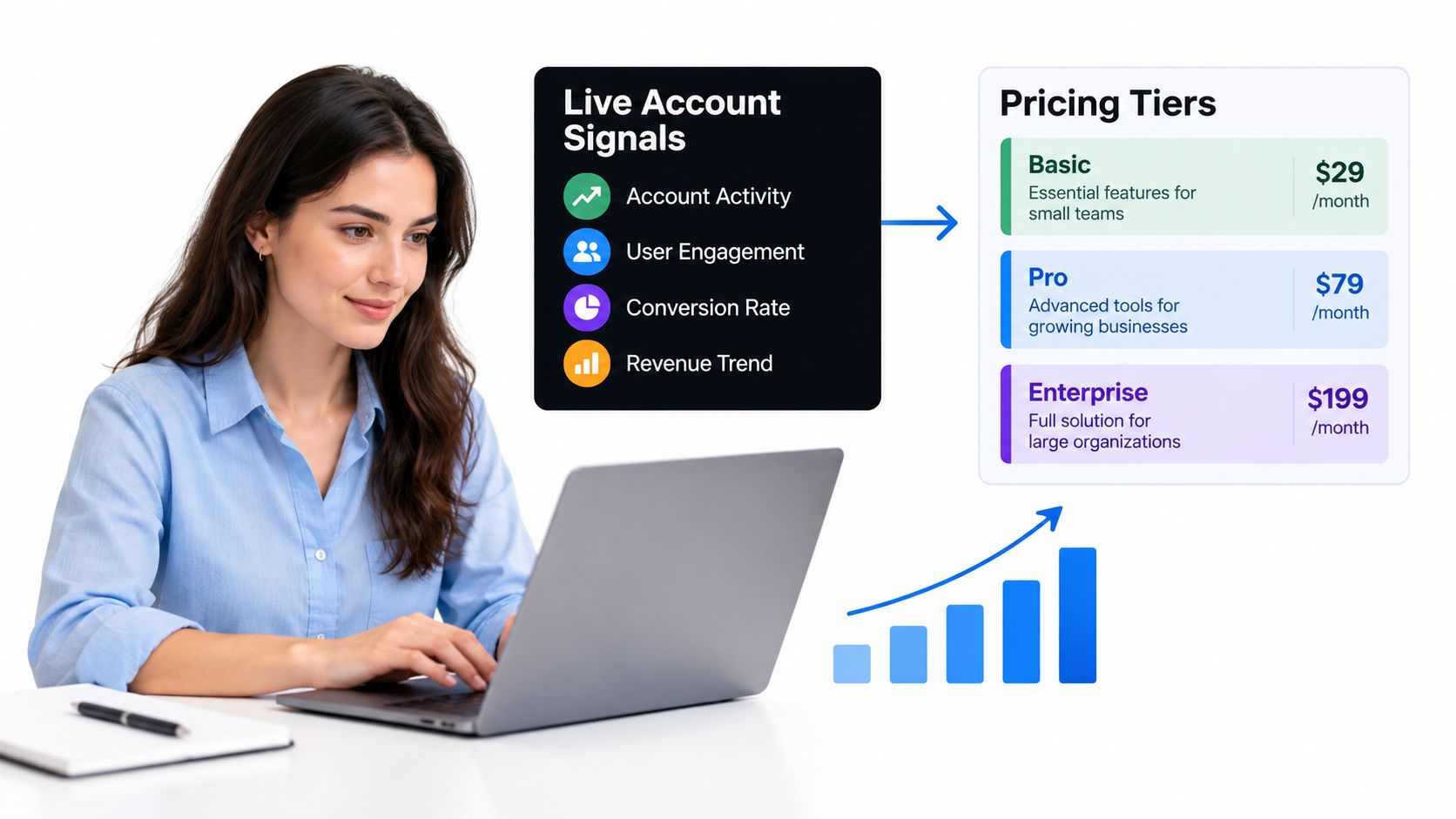
A pricing tier should answer a sales question: why is this offer appropriate for this account today? Static firmographics rarely provide that answer. Live account signals can.
Hiring activity, technology changes, funding announcements, leadership moves, reviews, and website behavior each reveal a different part of the buying context. None should automatically trigger a higher price. Together, they can indicate a change in urgency, operational scope, perceived risk, or ability to act.
Turn signals into pricing hypotheses
Start with a signal map, not an automation rule. For each event, define the likely business condition, the offer to test, and the evidence that would disqualify the recommendation.
| Account signal | Likely buying context | Pricing response to test |
|---|---|---|
| Hiring for a related function | The account may be building capacity or formalizing a process | Offer a package with workflow coverage and onboarding |
| A technology stack change | The buyer may be replacing a tool or creating an integration need | Lead with compatibility, migration, or integration value |
| A funding or expansion event | The account may be preparing for wider operational scope | Present a scalable tier, but validate the actual initiative |
| Repeat visits to pricing or demo pages | The account is actively evaluating options | Route quickly and test the relevant package rather than sending a generic price list |
| Leadership or operational changes | Priorities, approval paths, or risk tolerance may have shifted | Reconfirm the buying problem before changing the offer |
The Suby global expansion tiers provide a useful reference for thinking about how subscription packages can correspond to different expansion needs. The important lesson isn't to copy another company's tiers. It's to connect package boundaries to a customer's operational stage and expected use, then make those boundaries understandable to sales and buyers.
Use account intelligence without pretending it is certainty
A hiring spike doesn't prove budget. A funding announcement doesn't prove that the relevant team will buy your category. A pricing-page visit can come from research, procurement, or an existing customer. Signals should raise or lower confidence, not replace qualification.
This is why intent data in B2B works best when paired with account fit and a clear next action. A high-fit account with a recent technology shift and repeated visits to an integration page may deserve an immediate sales route. A low-fit account with one anonymous visit shouldn't be pushed into a premium workflow.
CapyScout can monitor account changes such as hiring, funding, leadership, technology shifts, reviews, reputation, and website intent, then enrich CRM records with source-backed context. In a revenue workflow, that information can support a segment recommendation such as “standard package,” “guided implementation,” or “enterprise evaluation,” while the rep still confirms the use case.
Don't price the signal itself. Price the business condition the signal helps you verify.
Design a routing matrix
A practical routing matrix uses two dimensions: fit and momentum. Fit comes from the account's market, use case, operating model, and technical compatibility. Momentum comes from recent behavior and business change.
An account with strong fit but weak momentum may enter nurture or receive an educational offer. Strong fit and strong momentum can justify a faster response and a package that includes higher support. Weak fit and strong momentum may require qualification before any discount or custom configuration. Strong signals with weak evidence should trigger research, not automatic price escalation.
This approach protects the buyer experience. The account sees an offer connected to a real need, while the seller avoids assuming that every large or active company belongs in the top tier.
Testing Willingness to Pay Across Segments
Naming tiers does not prove that buyers see meaningful differences between them. The key test is whether distinct account groups respond differently to the package, price, and buying conditions. Pricing research can provide that evidence, but the method should match the decision, available budget, and quality of the underlying segment data.
SurveyMonkey's pricing research guidance recommends comparing price sensitivity across segments and using methods such as Van Westendorp and Gabor-Granger. It also advises defining the decision first, whether the team is evaluating pricing, creative, or product priorities. For signal-based segmentation, pair stated responses with current account behavior. A technology change, new initiative, or active evaluation can create a more useful test context than a static industry label alone.
Choose the research method deliberately
| Method | Time to Results | Estimated Cost | Best Use Case |
|---|---|---|---|
| Targeted B2B survey | Weeks to months for agency-led work | $5,000 to $25,000 | Testing price sensitivity across defined professional segments, based on the 2026 consumer research cost review |
| Traditional qualitative study | Weeks to months | $25,000 to $75,000 | Understanding language, objections, perceived risk, and the reasons behind price reactions, based on the same cost review cited above |
| Automated pricing study | Hours to days | Varies by provider and design | Rapid comparisons across segments when the team needs a directional answer quickly |
| Signal-triggered test | Ongoing, as buying moments occur | Depends on the existing data and workflow | Testing offers in live contexts, such as a new initiative, technology change, or active evaluation |
The trade-off is practical. Traditional qualitative work can expose why buyers resist a package, but recruitment and analysis take time. Automated approaches return results faster and make refreshes easier as demand changes. They cannot correct weak questions, thin samples, or segments built from stale account attributes.
Use Van Westendorp for perception, Gabor-Granger for choice
Van Westendorp helps identify perceived price boundaries. Respondents consider when a price feels cheap, expensive, too cheap to trust, or too expensive to consider. The output helps frame an acceptable range, although it does not reproduce the complete buying process or the internal approval required for a purchase.
Gabor-Granger tests purchase likelihood at specified prices. Respondents see a price and indicate whether they would buy, allowing researchers to compare responses across segments. This offers a more direct view of price response, but it still measures stated behavior rather than a signed contract.
Use both methods when the decision requires insight into perception and purchase response. Then test the findings against observed quotes, win rates, discount requests, and renewal behavior. A survey can show that a package appears acceptable while sales conversations reveal that implementation risk prevents commitment.
Protect the quality of the segment estimate
Small samples produce unstable conclusions. A segment with only a few responses may appear highly price-sensitive because of one unusual respondent, not because the group has a dependable pattern. Poor segment definitions create the same problem. Combining different use cases, support expectations, or regions can produce an average willingness to pay that describes no real buyer.
A repeatable cadence does not require a large formal study every time. Start with a focused question, compare the result with live account behavior, and rerun the test when the offer, market, or buying context changes. Record what was tested, which accounts or segments were included, the conditions in effect, and the level of confidence. That record helps revenue teams distinguish a durable pricing signal from a temporary reaction to one market event.
Enforcing Pricing Governance in the CRM
A pricing strategy fails operationally when a rep can bypass it with an undocumented discount. The problem isn't only margin leakage. Ad-hoc concessions teach the market that your published tiers aren't real, make forecasts less reliable, and leave future reps without a consistent explanation for the price.
Governance should live where quotes and opportunities are managed, usually the CRM and connected billing or enterprise systems. The CRM needs enough account context to recommend a tier, enough controls to prevent casual exceptions, and enough flexibility to handle genuine edge cases.
Build the controls around evidence
A practical CRM workflow should include:
- Required segment evidence: Store the account's fit grade, use case, region, current signals, and source-backed reason for the recommended tier.
- Quote restrictions: Prevent reps from selecting a higher discount band or custom package without the required approval.
- Approval ownership: Assign approvals by exception type, such as commercial discount, implementation concession, nonstandard terms, or product scope.
- Expiration rules: Give temporary pricing conditions an end date so they don't become permanent precedent.
- Reason codes: Make reps choose a structured reason for every exception, then review patterns rather than relying on free-text explanations.
Daily enrichment keeps these controls relevant. If the account's technology, leadership, hiring, or intent context changes, the recommended tier may need review. CRM data enrichment in 2026 is most useful when enrichment changes a workflow, not when it merely adds fields to a record.
Handle conflicting signals explicitly
Accounts often show mixed evidence. A small company may have a high-risk implementation and urgent need. A large company may have broad potential but no funded project. A local business may show strong reputation-related pain but lack the operating capacity for a complex package.
Use a precedence rule instead of asking reps to improvise:
- Confirm the buying use case. A signal without a relevant problem shouldn't change the tier.
- Prioritize verified scope. Expected usage and support needs should outweigh a generic firmographic label.
- Use risk to determine service intensity. High migration, compliance, or operational risk may justify guided delivery, not just a higher software fee.
- Escalate unresolved conflicts. When fit and urgency point to different packages, route the opportunity for review rather than granting a discount.
- Record the decision. The next seller should understand why the account received that offer.
An ERP connection can make governance more complete by linking commercial terms, invoicing, and operational records. Teams evaluating the architecture can use this guide to ERP integration with CRM as context for connecting revenue data across systems.
A discount should buy a defined concession from the buyer, such as term, scope, payment structure, or reference access. It shouldn't compensate for an unclear segment definition.
Keep exceptions visible to leadership
Revenue operations should review exception frequency, approval turnaround, discount reasons, and performance by segment. If one segment requires repeated discounts, the issue may be pricing, packaging, positioning, or qualification. Don't respond by tightening the approval threshold. First determine whether the tier is misaligned with the buyer's actual value perception.
Governance isn't a barrier to sales. It gives reps a credible explanation for the offer and gives leadership evidence when the model needs to change.
Launching and Maintaining Your Pricing Model
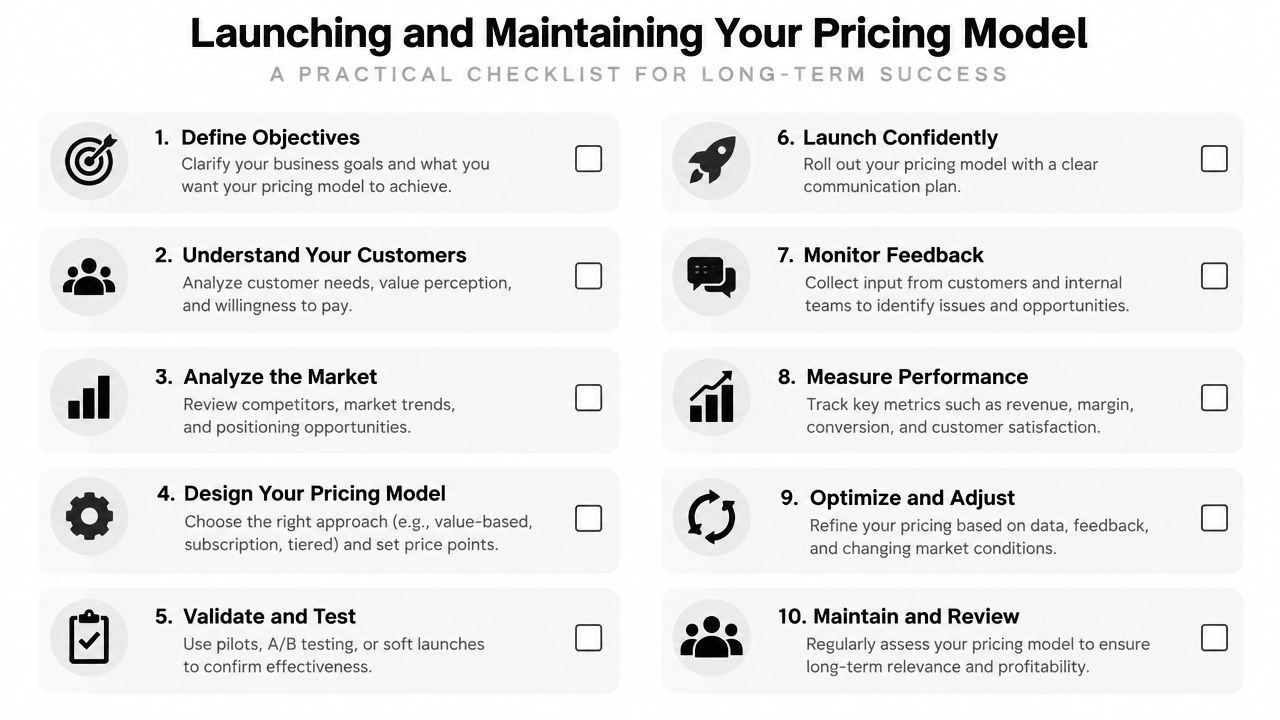
Launch the model as an operating system, not a spreadsheet. The first release must be clear enough for sales to use, constrained enough for finance to trust, and flexible enough to learn from live opportunities and changing account signals.
Begin with a limited rollout. Bring product, sales, finance, marketing, and customer success into agreement on segment definitions, value metrics, approval rules, and the evidence required in the CRM. Configure fields and workflows before asking reps to sell the new packages.
Use a controlled rollout
Give a defined sales cohort the new tiers first. Capture objections, quote exceptions, buyer questions, and cases where the recommended tier missed the account's needs. A beta exposes operational friction that pricing workshops often miss, especially around data freshness, signal quality, and approval ownership.
Then scale in stages:
- Document the offer: Define who qualifies, what each tier includes, which live signals matter, and which claims sales can make.
- Configure the CRM: Add segment fields, enrichment rules, quote controls, and approval paths.
- Train on decisions: Teach reps to diagnose the buying context and interpret account triggers, rather than memorize a price table.
- Review live deals: Compare recommended tiers with seller choices, buyer responses, and approved exceptions.
- Expand carefully: Roll out to the wider team only after the workflow produces usable evidence.
Monitor health, not just revenue
Track win rate by segment, discount frequency, average selling price, sales-cycle friction, package mix, expansion behavior, and retention signals. These measures help separate a bad price from a bad segment definition. Low conversion with few discounts can indicate weak value communication. Frequent discounts in one segment can indicate that the package does not match its use case or that account signals are routing buyers to the wrong tier.
Set refresh triggers instead of relying only on an annual review. Revisit the model when the market reference changes, a competitor alters packaging, support requirements shift, a major product capability launches, or account behavior reveals a new buying pattern. Automated research can help teams refresh tests in hours to days rather than waiting weeks to months for agency-led work.
Keep the logic understandable. If sales cannot explain why an account belongs in a tier, buyers will question the price. Tie recommendations to current signals, record the evidence behind exceptions, and revise the model when repeated deal outcomes contradict the original assumptions.
CapyScout helps revenue teams discover accounts, monitor hiring, funding, technology, leadership, reviews, and website intent, and write source-backed context into HubSpot, Pipedrive, or Attio. Use CapyScout to connect live account signals with segment routing, pricing workflows, and timely outreach.