

Market Intelligence Software: 10 Tools Compared for 2026
Compare 10 market intelligence software options for tracking companies, market shifts, and buying signals — with honest pros, cons, and use cases.
The most popular advice about market intelligence software is to buy the platform with the broadest coverage. That's a poor starting point. A tool that helps an analyst search company filings won't necessarily tell an SDR which account deserves a call today, and a competitive battlecard won't explain where a rival gets its website traffic.
The category covers distinct jobs: spotting buying signals, tracking competitors, benchmarking digital markets, searching documentary evidence, and discovering emerging trends. Private-company research adds another useful specialty. Buyers who choose by brand name or feature count can end up with capable software built for the wrong question.
Start with the decision you need to make. If you're deciding whom to contact, evaluate account-level timing and evidence. If you're preparing sellers for competitive deals, choose the right competitor monitoring tool around usable sales guidance, not the volume of changes it captures.
Buying principle: Compare tools within the job you need done. Treat tools from different categories as potential complements, not automatic substitutes.
The tools below are grouped by their practical strengths rather than ranked as interchangeable alternatives. For each, the useful distinction is what your team can do with the output, what still requires human verification, and which neighboring workflow the product doesn't replace. A source-backed account alert, an estimated traffic chart, and a summary of management commentary can all be valuable. They support different decisions.
Table of Contents
- 1. CapyScout
- 2. Contify
- 3. Similarweb Web Intelligence
- 4. AlphaSense
- 5. Crayon
- 6. Klue
- 7. Kompyte
- 8. Crunchbase
- 9. Semrush .Trends
- 10. Exploding Topics
- Market intelligence software at a glance
- How to Choose the Tool That Matches Your Signal
1. CapyScout
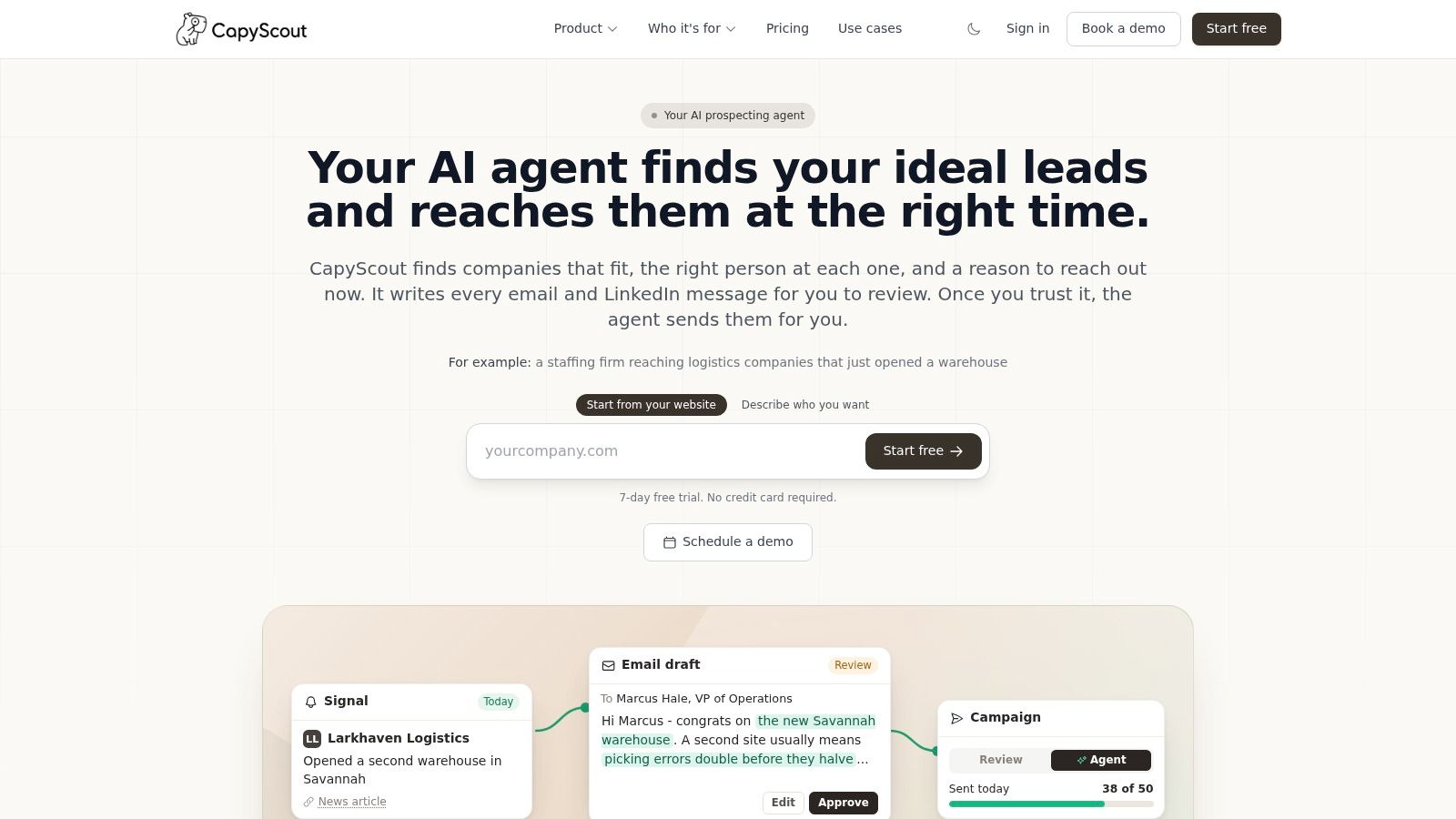
Best for account discovery and timely reasons to reach out. Our platform combines prospect research, buying signals, contact discovery, outreach drafting, and CRM enrichment for B2B teams and local agencies. Start with an ideal-customer description, customer lookalikes, CRM records, website visitors, or existing connections.
The important output isn't another static contact list. We monitor hiring, funding, leadership changes, technology shifts, reviews, news, and watched website activity, then attach evidence to briefs explaining who fits and why now. A local agency can monitor reputation changes, while a SaaS seller can watch for a technology replacement or relevant new hire.
Where the workflow comes together
Source-backed drafts give sellers a starting point they can review, edit, or skip. Optional inbox connection means teams can use prefilled drafts in their existing email client without granting inbox OAuth access; a configured agent can also run an established campaign within sending limits, pause when issues arise, and stop follow-ups after a reply.
- Operational fit: HubSpot, Pipedrive, and Attio synchronization keeps enrichment and account context alongside existing records. Alerts can reach Slack, Teams, email, or webhooks.
- Broader uses: Signup scoring, daily CRM enrichment, local reputation monitoring, an API, and an MCP server support workflows beyond cold prospecting.
- Commercial trade-off: Credit-based pricing includes unlimited seats without per-seat fees. Paid rates and credit allowances need to be established before forecasting ongoing usage.
The strongest reason to shortlist this approach is account timing connected to action. The limitation is public-web visibility: a quiet company may produce little useful evidence, and a relevant event still doesn't prove purchasing intent.
Keep draft review enabled while validating a campaign. Source citations let you inspect the underlying claim; they don't remove your responsibility to confirm that the event supports the message.
2. Contify
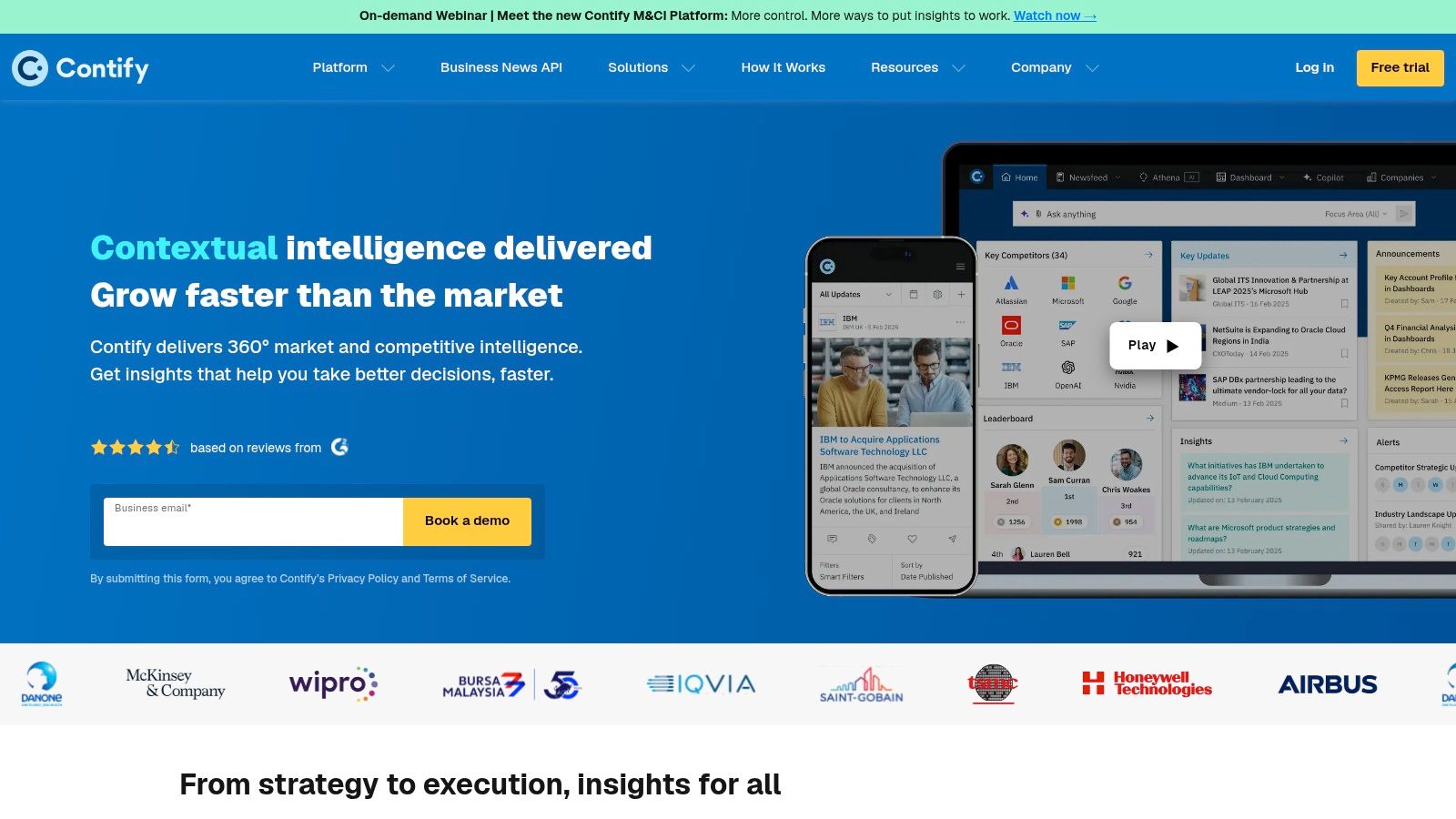
Contify fits organizations that need the same market monitored once, then translated into different outputs for strategy, product marketing, and sales. The evaluation is less about whether it collects enough and more about whether each audience gets a usable brief.
Its coverage spans competitor websites, news, filings, social sources, and other business information, with website-change monitoring, customized feeds, structured insights, dashboards, newsletters, and Athena AI answers. Run a real week during the trial: ask for an executive briefing, a pricing-change alert for sellers, and a product-marketing view on messaging moves. If one person still has to repackage every finding, the program will decay.
- Strength: Competitor and broader market monitoring can live in one shared program instead of separate research habits.
- Trade-off: Taxonomy design, source selection, filtering, and distribution rules need an owner; a small outbound team may not need that overhead.
- Verification: Test interface language and generated outputs with the people who will consume them. Source-language coverage does not guarantee usable localization.
I'd shortlist Contify when someone owns intelligence across functions. I would not buy it to create a daily SDR queue: those jobs may share external information, but they require different outputs and maintenance.
3. Similarweb Web Intelligence
A competitor's traffic estimate isn't its analytics account. That distinction should guide every evaluation of Similarweb Web Intelligence.
The platform helps teams compare website traffic, engagement, acquisition channels, keywords, audiences, and digital markets. Country-level views and related app intelligence can help investigate where online competition differs geographically, subject to the package you evaluate.
Say you're considering a new market. Comparing relevant competitors' channel mix can help you decide whether to investigate search, partnerships, paid acquisition, or referral opportunities. It doesn't establish those competitors' revenue, profitability, or willingness to buy your product.
Use digital estimates to identify a question worth investigating, not to manufacture certainty about a competitor's business.
What to validate before buying
Build the evaluation around domains that matter to your decision, including niche competitors and smaller companies. Check whether the available geography, history, exports, and research modules support the comparison you need.
- Works well for: Side-by-side digital benchmarking, audience exploration, market discovery, and investigation of channel shifts.
- Doesn't replace: Regulatory research, company financial analysis, contact discovery, or account-level buying-signal monitoring.
- Commercial caution: Advanced research needs may require higher tiers or separate modules. Compare the complete package, not an entry-level feature description.
Similarweb belongs on the shortlist when online behavior is central to the market question. For a manufacturer whose commercial activity largely happens through distributors and offline relationships, website activity may describe only a narrow part of the opportunity.
4. AlphaSense
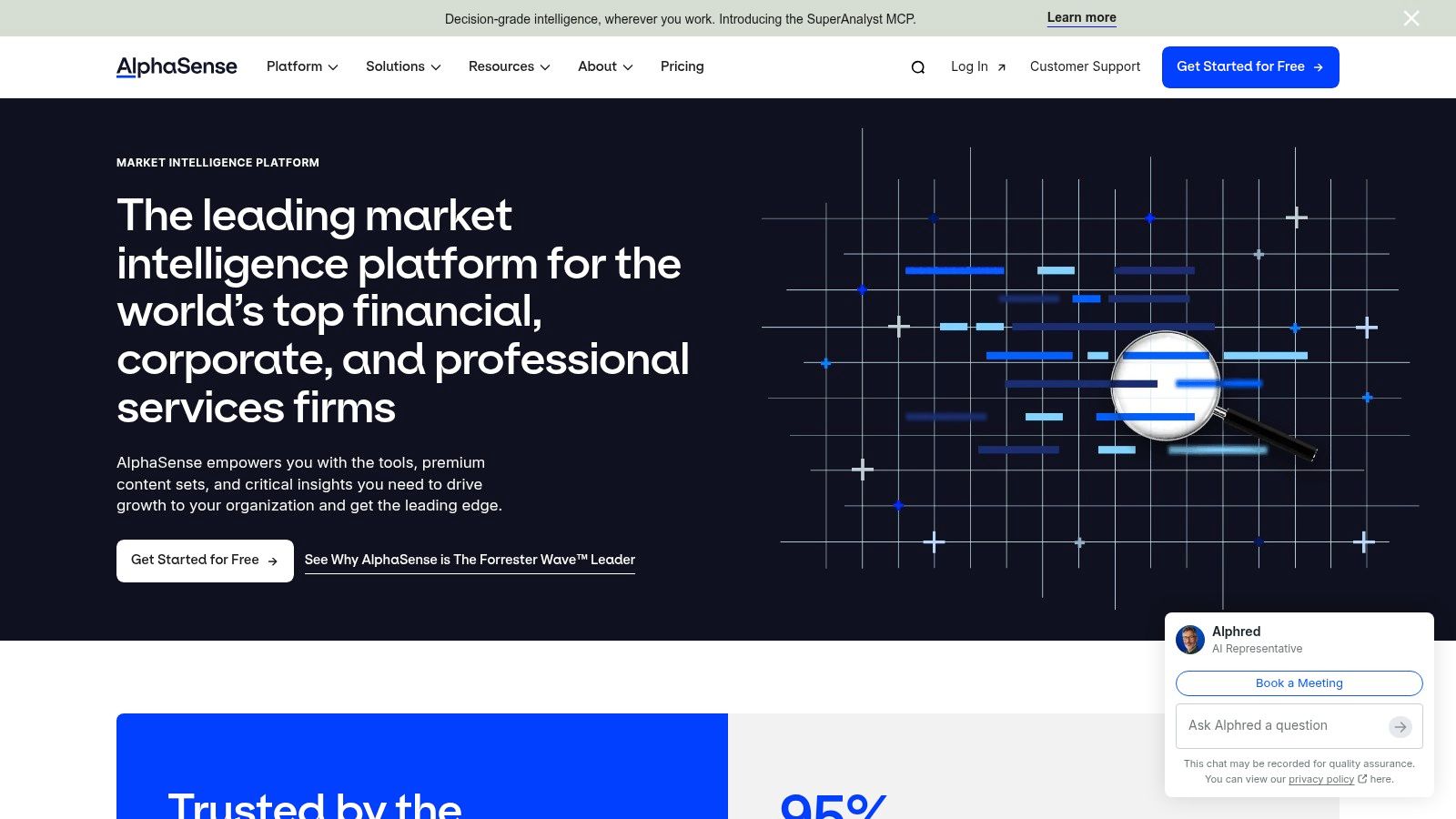
AlphaSense is the documentary-research option in this comparison. Its combination of AI-assisted search and business content suits strategy, finance, consulting, and corporate research teams investigating companies and industries.
The content mix includes company materials, filings, news, broker research, and expert-call transcripts. Natural-language search and summarization help researchers locate and synthesize relevant passages without treating every document as a separate research project.
Research depth versus prospecting execution
The buying question is whether your team needs to investigate an argument or execute an account workflow. Searching management commentary about procurement pressure is different from finding an appropriate contact and writing a CRM-ready reason to reach out; this sales intelligence platform guide explains the latter workflow.
- Strength: Multiple documentary sources can support company and industry analysis within a common search environment.
- Trade-off: A broad research library may be unnecessary for a small outbound team whose main bottleneck is prioritization.
- Plan dependency: PowerPoint and Excel add-ins, APIs, MCP access, and internal-content search should be checked against the proposed subscription. Pricing is quote-based.
For important conclusions, inspect the underlying passage and surrounding context. That's especially relevant for equity analysts using call summaries, where an omitted qualification can materially change the interpretation.
Use the platform to accelerate evidence retrieval, then distinguish management statements, expert opinions, and established facts in your own analysis. A polished synthesis shouldn't erase those differences.
5. Crayon
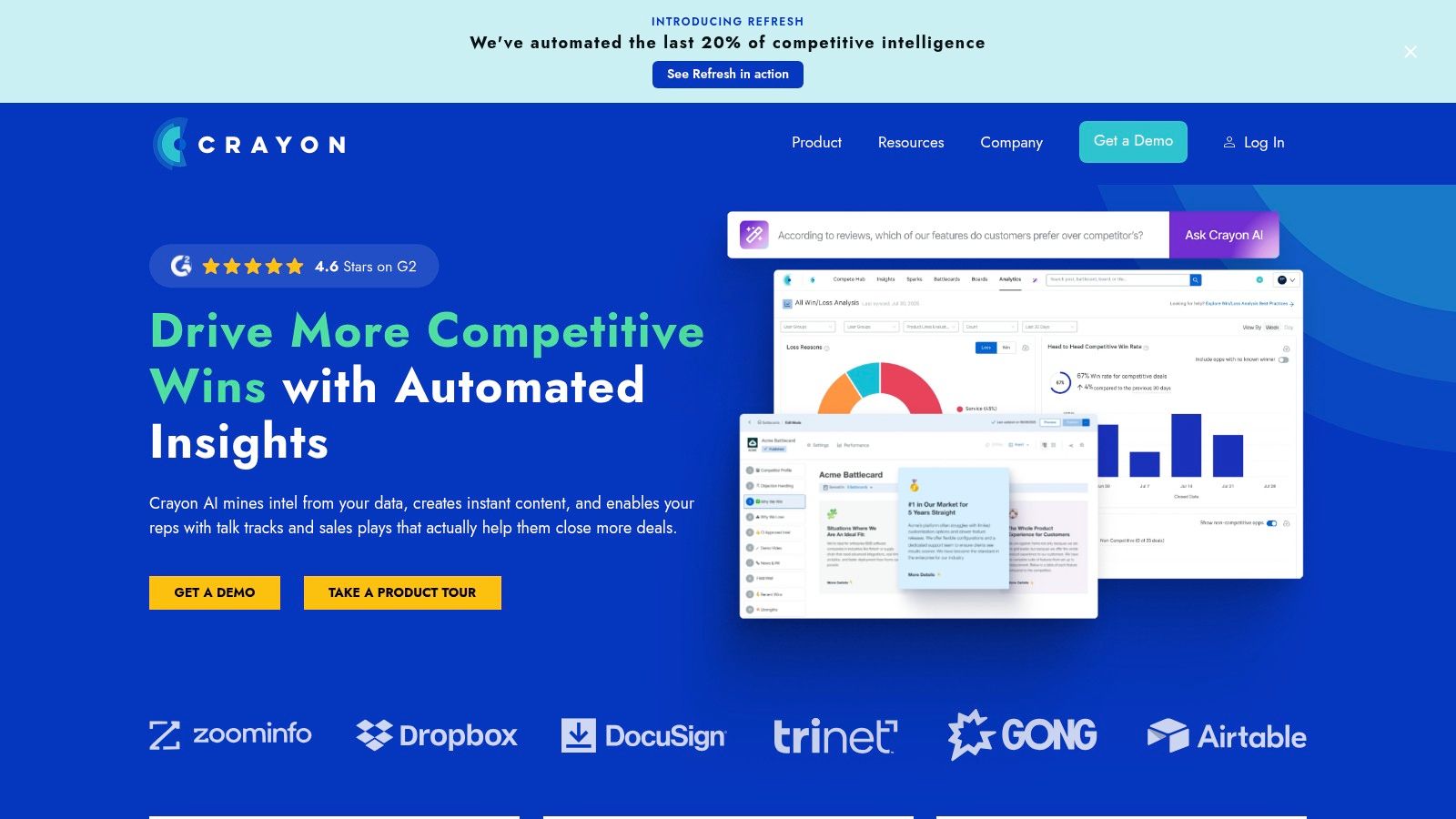
A competitor changes its pricing page. Product marketing needs to understand the change; sellers need to know whether it affects an active deal. Crayon connects those tasks through competitor monitoring and sales enablement.
It tracks activity across websites, product and pricing pages, reviews, news, and other online sources. AI-assisted collection and categorization help teams organize findings, while battlecards and integrations bring selected intelligence into sales workflows.
The practical value depends on the step between detection and distribution. A page change becomes useful guidance only after someone establishes what changed, why it matters, and what a seller can responsibly say.
Monitor less, interpret better
- Best fit: Product marketers and enablement teams maintaining competitive positioning and practical sales materials.
- Useful connection: External findings can be combined with internal sales intelligence, with delivery through tools including Salesforce and Slack, according to the vendor.
- Main limitation: Monitoring produces noise unless the team defines relevant sources, filters routine changes, and assigns a curator.
I'd test Crayon with a competitive objection your sellers already encounter. Ask the product to support a defensible response using current evidence, not produce a stream of competitor updates.
It isn't a general-purpose prospecting database. If the immediate need is finding new accounts and contacts, competitive enablement won't solve that bottleneck. Public pricing isn't listed, so scope the monitored competitors, users, integrations, and services in the proposal.
6. Klue
Best for connecting competitive knowledge to deal support. Klue combines competitor monitoring, internal intelligence, battlecards, and win/loss capabilities for revenue teams that regularly compete head-to-head.
Its appeal is the connection between what competitors say and what buyers care about. Website updates can inform positioning, but buyer feedback and internal deal knowledge help determine which differences deserve attention in a sales conversation.
Adoption matters as much as collection
A shared repository only helps if sellers trust it and can retrieve the relevant guidance during a deal. Assign owners to competitor content, separate evidence from recommended talk tracks, and give sellers a clear way to flag outdated claims.
- Strength: Competitive findings, internal knowledge, and win/loss learning can support a common enablement program.
- Trade-off: Someone must maintain the content and reconcile conflicting field reports. Buying software doesn't establish that editorial process.
- Boundary: Klue isn't a broad company database or a replacement for market-wide digital benchmarking. Pricing is quote-based.
The distinction from account monitoring software is important. Account monitoring asks what changed at a customer or prospect; competitive enablement asks how your team should respond when another vendor is involved.
Shortlist Klue when competitive deal execution is the central problem. During evaluation, have a seller retrieve evidence for a real objection and have a content owner update it. Both sides of that workflow need to work.
7. Kompyte
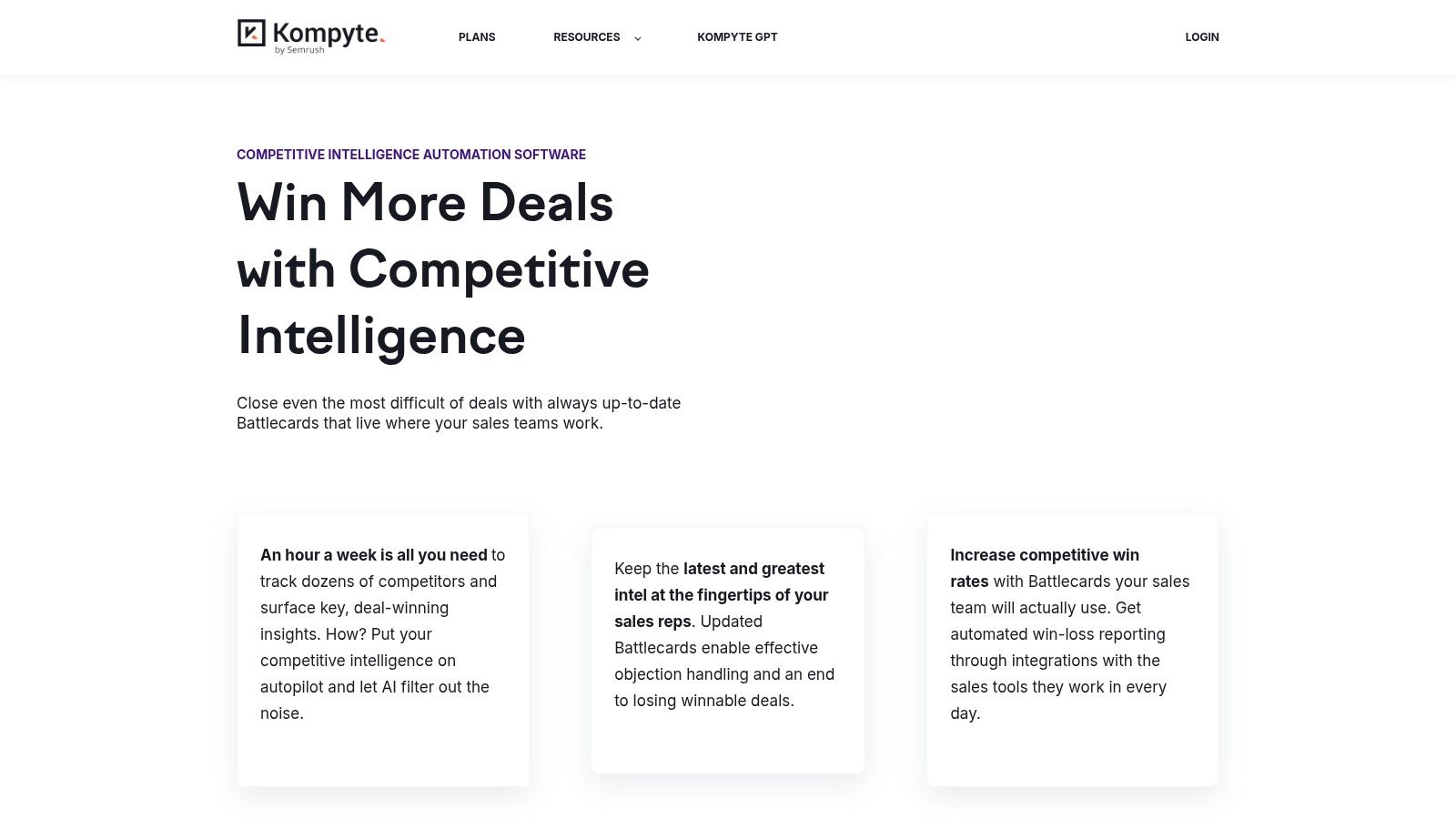
Kompyte suits teams replacing manual competitor checks with a structured monitoring and enablement workflow. It follows competitor websites and other external sources, then organizes findings into reports and battlecards.
Coverage includes product pages, reviews, news, job posts, and blogs. Integrations with Slack, Microsoft Teams, Salesforce, HubSpot, and sales-enablement tools can help teams deliver selected findings without requiring everyone to work inside the monitoring interface.
Test the handoff, not just detection
The useful pilot starts with a competitor change and ends with someone taking an appropriate action. A product marketer might revise positioning after a launch, while a seller might need a concise explanation of a packaging difference.
- Monitoring advantage: A mix of sources can reduce repetitive page checking and consolidate competitor activity.
- Workflow advantage: Reports, battlecards, and collaboration integrations support distribution to different teams.
- Contract trade-off: Pricing depends on tracked competitors, licensed users, and features such as SSO. Annual plans are standard, and shorter terms may cost extra.
The vendor describes onboarding and ongoing support within its plans. Use that support to configure relevance rules and ownership, rather than treating successful setup as the moment the first alert appears.
Kompyte competes most directly with other competitor-tracking and enablement tools. It doesn't replace documentary research, private-company discovery, or account-level prospecting. If your team hasn't decided who curates findings, automation can move manual work from collecting changes to sorting alerts.
8. Crunchbase
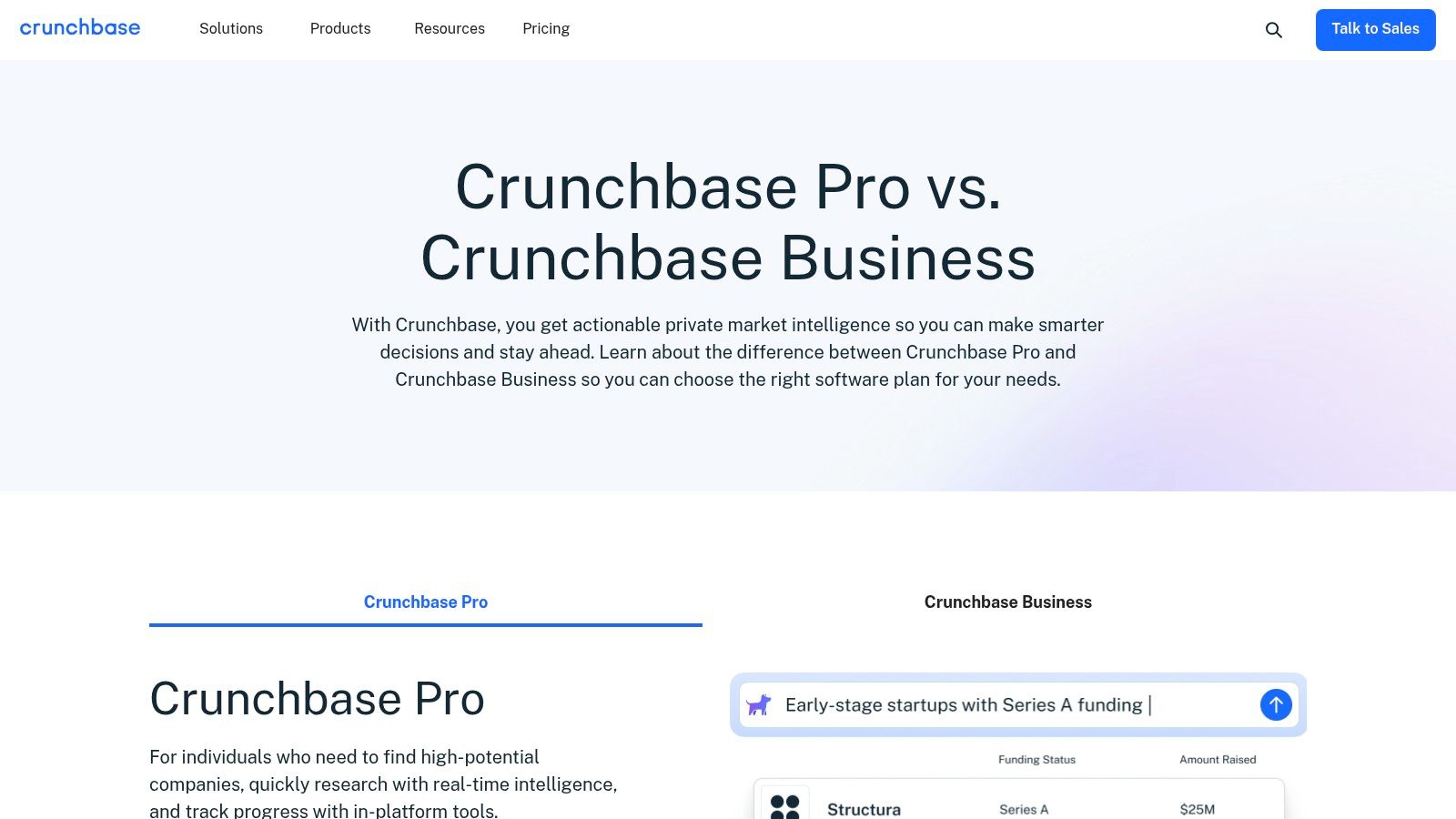
Need a starting universe of private companies rather than a stream of competitor page changes? Crunchbase is the more relevant category.
Company profiles, funding information, growth attributes, lists, saved searches, and activity alerts support company discovery and private-market research. Business-level features add predictions, insights, AI search, CRM integrations, and team administration; a paid API supports integration into other systems.
The practical use is turning a market definition into a researchable company set. A seller might identify businesses matching a funding or growth profile, then investigate which accounts have a relevant operational need.
A company attribute isn't a buying decision
Funding can justify investigation, but it doesn't establish budget for your category. Use these buying-signal examples to connect company developments with a plausible need rather than treating every announcement as permission to pitch.
- Strength: Private-company discovery, funding research, and saved-search monitoring provide a useful foundation for account selection.
- Access trade-off: Free access limits results and features. Business and API pricing are sales-led.
- Verification requirement: Check coverage and record freshness against your geography, company size, and industry before building an automated workflow.
Crunchbase helps answer which companies belong in the research set. It doesn't, by itself, settle whether an account is ready to engage or whether an inferred growth signal is accurate.
During a trial, inspect familiar companies alongside unfamiliar discoveries. Familiar records expose omissions; unfamiliar ones show whether the platform expands your reachable market in a useful way.
9. Semrush .Trends
For a marketing team already using Semrush, Semrush .Trends offers a way to connect market investigation with existing digital-marketing work. Its focus is competitor traffic, channels, audience characteristics, and market geography.
That makes it useful for questions about online demand and acquisition patterns. It's less suited to operational account events such as funding, leadership changes, or a technology replacement.
Similar question, different workflow fit
Compare .Trends with Similarweb using the same domains and market question. Don't assume agreement between estimates proves accuracy, or that disagreement makes either tool useless; investigate coverage, geography, time period, and how each output affects the decision.
A traffic chart can support a channel hypothesis. It can't tell you which executive is preparing to buy.
- Best fit: Marketing and growth teams connecting competitor analysis with SEO, content, and acquisition planning.
- Integration option: Trends tools and APIs can support spreadsheets, reporting systems, custom dashboards, and internal analysis.
- Commercial constraint: Full access may require a paid subscription and add-on. The API is a separate paid product with usage limits.
The key trade-off is workflow convenience versus research scope. Existing Semrush users may prefer fewer systems, but that convenience shouldn't override missing coverage for a critical market.
Test a concrete decision, such as which geography deserves a localized campaign or which channel merits further investigation. If the output can't change a planned marketing action, another dashboard won't justify the purchase.
10. Exploding Topics
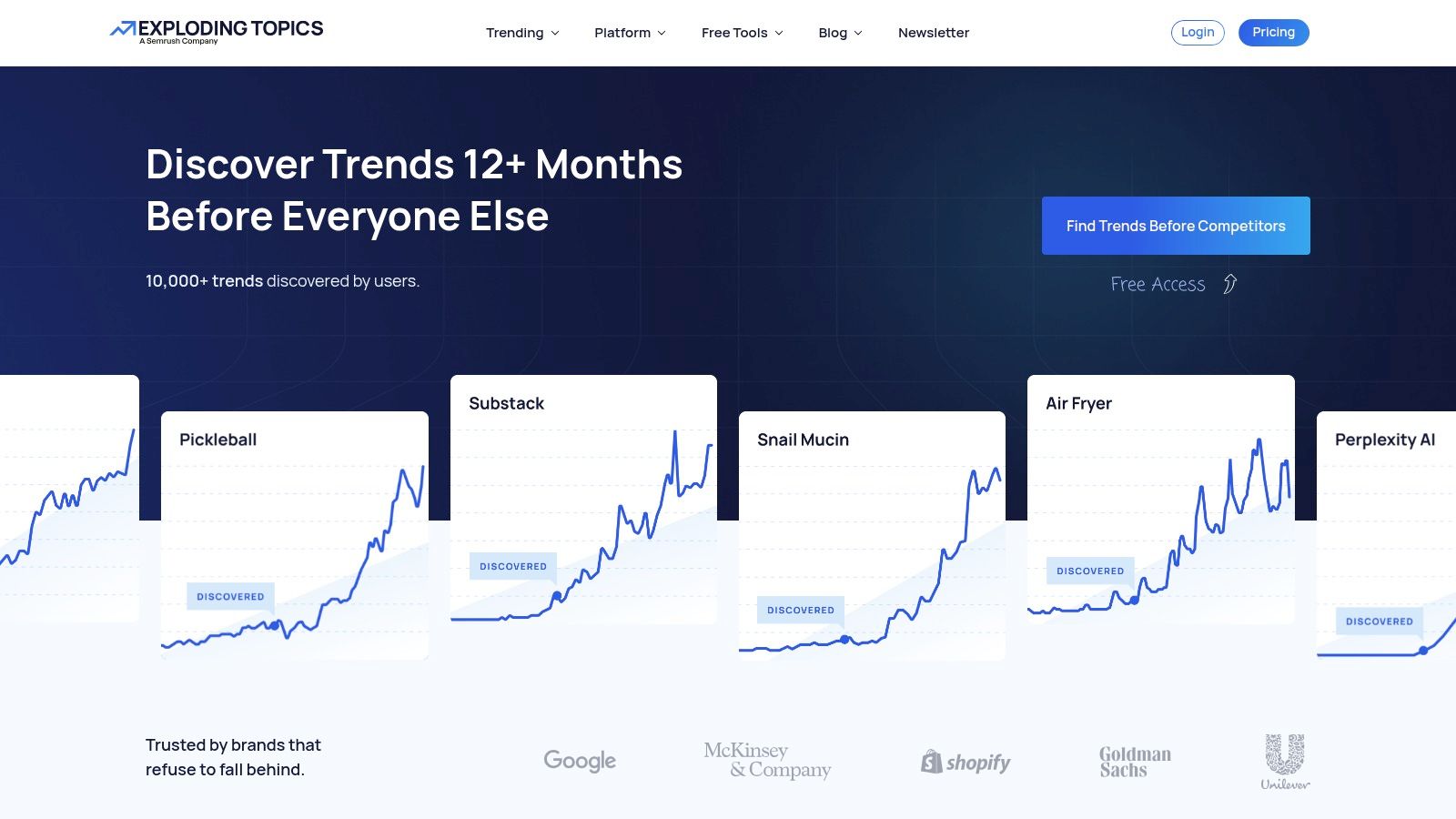
Exploding Topics starts earlier in the discovery process than most tools in this comparison. It helps founders, marketers, and investors investigate topics, products, and markets that may be gaining attention.
Trend histories, tracking, analysis, and forecasts support theme discovery. Depending on the plan, startup research, exports, reports, and API access can extend that work into a broader research process.
Attention is the beginning of validation
Say an emerging software category appears relevant to your customers. Use that observation to inspect search intent, competing products, pricing approaches, customer discussions, and distribution options before committing resources.
- Strength: Topic and product discovery can reveal themes worth investigating before they appear in your existing company lists.
- Accessibility: Free access and published self-serve pricing make initial evaluation more straightforward than a sales-led procurement process.
- Limitation: Growing attention doesn't establish commercial viability, durable demand, or account-level purchasing intent.
A forecast should remain visibly separate from an observed trend history. Neither should become a revenue projection without additional evidence about the buyer, problem, willingness to pay, and route to market.
I'd use Exploding Topics to generate and prioritize research hypotheses, not to decide which prospect receives an email today. It doesn't replace CRM enrichment, account monitoring, competitive battlecards, or documentary due diligence.
The most useful output is a focused investigation brief: what appears to be changing, who might care, and what evidence would disprove the opportunity. That keeps trend discovery connected to decisions rather than novelty.
Market intelligence software at a glance
These tools do not stand in for one another. A traffic benchmark, a battlecard, and an account alert answer different questions, so compare them by the job, not by feature count.
| Best for | Signal focus | Pricing transparency | Free option |
|---|---|---|---|
| CapyScout, B2B prospecting and local-business outreach | Live account signals, including hiring, funding, leadership changes, reviews, and website visits | Credit-based plans; paid rates set by plan | 7-day trial, then a Free plan with 5 watched accounts and 250 credits |
| Contify, Cross-functional market and competitive intelligence | Competitor, market, industry, and account updates | List price not published | No free option listed |
| Similarweb Web Intelligence, Digital market and website benchmarking | Estimated traffic, engagement, channels, and keywords | Tiered subscription pricing; compare current plans on the vendor's site | No free option listed |
| AlphaSense, Documentary research for strategy, finance, and consulting | Filings, company documents, news, broker research, and expert-call transcripts | Quote-based; pricing not publicly listed | No free option listed |
| Crayon, Competitive intelligence and sales enablement | Competitor changes in messaging, products, pricing, and other activity | Public pricing not listed | No free option listed |
| Klue, Competitive deal support and sales battlecards | Competitor activity, internal knowledge, and win/loss insights | Quote-based | No free option listed |
| Kompyte, Competitor monitoring for sales, marketing, and product teams | Competitor websites, products, reviews, news, jobs, and blogs | Priced by competitors tracked, users, and features | No free option listed |
| Crunchbase, Private-company, startup, and investment research | Company profiles, funding, growth, and company activity | Limited free access; business and API pricing is sales-led | Limited free access; free Pro trial |
| Semrush .Trends, Digital marketing and competitor research | Estimated traffic, channels, geographies, and audience attributes | Paid subscription and add-on may be required; API is separately priced | No free option listed |
| Exploding Topics, Emerging trend and product discovery | Online signals, trend histories, and forecasts | Self-serve pricing published | Free access and listed 7-day Pro trial |
How to Choose the Tool That Matches Your Signal
Choose market intelligence software by the decision it supports, then compare vendors within that category. A wider feature list won't compensate for the wrong source coverage or an output your team can't use.
The practical shortlist is straightforward:
- Timely reasons to contact accounts: Shortlist CapyScout for prospect discovery, account monitoring, evidence-backed briefs, and connected outreach workflows.
- Cross-team competitive programs: Consider Contify for broader intelligence distribution, and Crayon, Klue, or Kompyte for competitor monitoring and enablement.
- Digital benchmarking: Compare Similarweb and Semrush .Trends using your actual domains, countries, and acquisition questions.
- Documentary research: Evaluate AlphaSense for searching and synthesizing business documents.
- Private-company discovery: Use Crunchbase to investigate company attributes, funding, and developments.
- Emerging themes: Consider Exploding Topics for trend discovery and hypothesis generation.
Run a pilot around real work
Run a two-week pilot as an evaluation exercise, not a promise of revenue impact. Use real target accounts, current competitors, and an unresolved market question. Include accounts with sparse public information so the evaluation exposes gaps rather than only demonstrating easy matches.
For every alert, inspect the source, publication date, account attribution, and claimed implication. Distinguish the original event from a republished article, and record whether a seller could act without reconstructing the research.
IDC's discussion of continuously tracked market intelligence distinguishes point-in-time stated intent from subsequent behavior. Apply that distinction operationally: an observed event, an account attribute, and inferred buying intent aren't the same thing.
Evaluate the complete handoff, too. Confirm that the right person receives the alert, the CRM update preserves evidence, and an unsupported inference doesn't become a factual field. Keep ambiguous intent and sensitive claims subject to human review.
Buy complementary capabilities deliberately
A signal tool and a benchmarking or documentary-research tool can serve different decisions without duplicating each other. Before adding another subscription, identify the missing output, whether that's a seller-ready account brief, a channel comparison, or evidence for a strategic argument.
Use comparisons of market intelligence platforms for 2026 to assemble a shortlist, then let your own workflow determine the purchase. Measure useful findings, verification effort, delivery quality, and ongoing maintenance rather than searches or alert volume.
For account timing, our platform watches company lists or CRM records on a schedule and explains whom to contact and why, with evidence attached. After the 7-day trial, a Free plan remains available forever with 5 watched accounts and 250 credits, allowing a small ongoing monitoring workflow without committing to a paid rollout.
Visit CapyScout to turn an ideal-customer description or existing account list into source-backed prospect research, buying-signal alerts, and outreach drafts. Start with a focused group of accounts, inspect the evidence behind each recommendation, and test the handoff into HubSpot, Pipedrive, or Attio before expanding automation.
Not ready to start? Get a free target list: 10 companies to sell to, picked from your website.